JP Morgan disaster capital investments
Filed under: Advertsing | Tags: JP Morgan, oil investments, propaganda
 Leave a Comment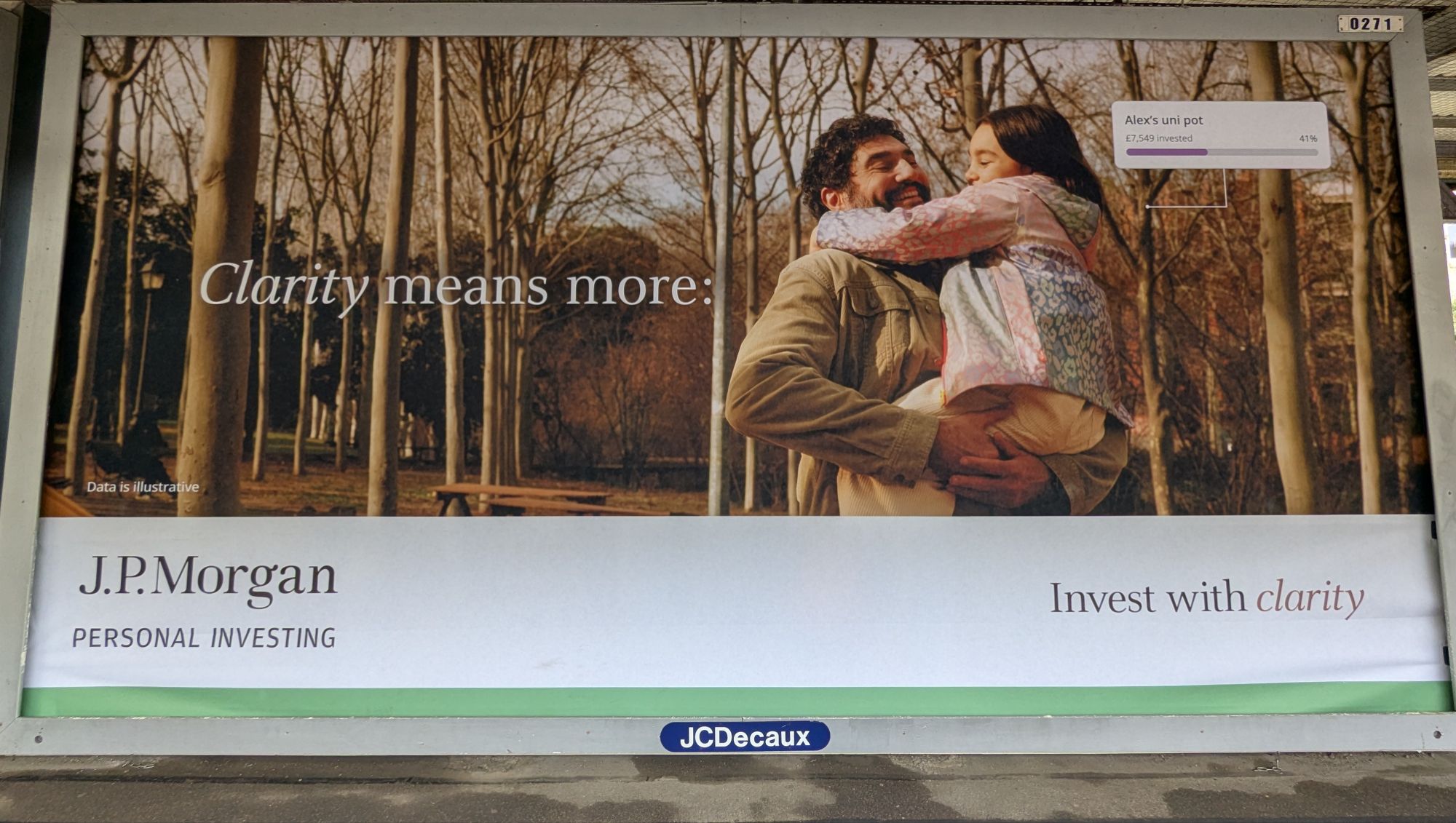
Last week I posted a picture of a billboard advertising investments that would do the opposite of providing the security the investor seeks. Here is another one on the same theme.
I’ll risk interpreting the image as one of father and daughter. I trust the clarity there is an app that tells you your real-time financial performance? Questions though – they seem to be in a forest that is leafless. Autumn maybe? What does that say? Maybe without leaves the forest makes clear the routes through?
And, of course, The investments fund further biodiversity decline. The daughter has no future, despite the app.
When the advertised product does the opposite of what is intended
Filed under: Advertsing | Tags: advertising, climate change, environment, Investment advertising, JP Morgan, JP MorganChase
Comments (1) A number of years ago I posted regularly photographs of German billboards where it was still legal to advertise cigarettes. The Germans love all things dangerous and lethal, including driving at suicidal speeds. Those posts were very popular – and still are despite there being no additions to the collection since before Covid. It has been difficult to find a replacement, and hence my posts have focused on book reviews and political comment. I think I have now found a suitable replacement – investment advertising. Equally lethal.
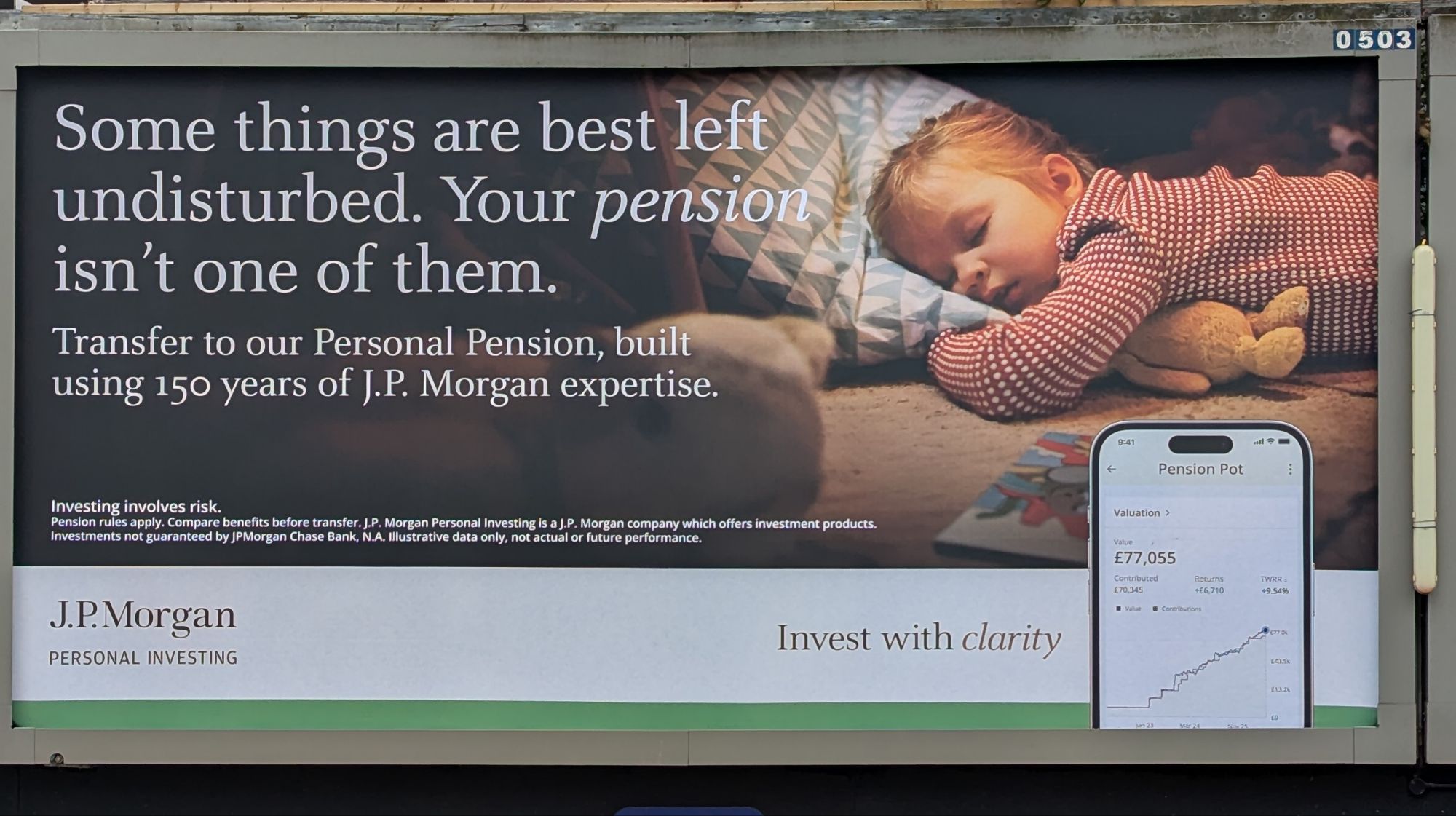
Let me start with JP Morgan. The billboard on the left I snapped at Luton railway station on 11 September 2026. I see two potential messages here. The first is, how sweet, a sleeping child. And I presume that the child may be related to the potential pension investor. The second, of course, is JP Morgan’s expertise in investment that gets a better return than other financial services companies.
Whether that is true or not, I’m not sure. But what I am sure about is that if the investor is the parent of that child then investing with JP Morgan may not be as wise as it may seem. JP Morgan is the biggest investor in fossil fuels globally. Last year JP Morgan invested $58bn in fossil fuel interests. Interests that are totally against the future wellbeing of that child. When the child wakes up the question will be, “why did you finance fossil fuels when you knew that burning them warms the planet to unlivable temperatures in my lifetime?”
Flight Behaviour by Barbara Kingsolver, book review
Filed under: Book reviews, Environment | Tags: Barbara Kingsolver, book review, climate change
Leave a Comment This is my review of Barbara Kingsolver’s novel, Flight Behaviour. It has plenty of spoilers so read on only if you have already read the book or do not intend to.
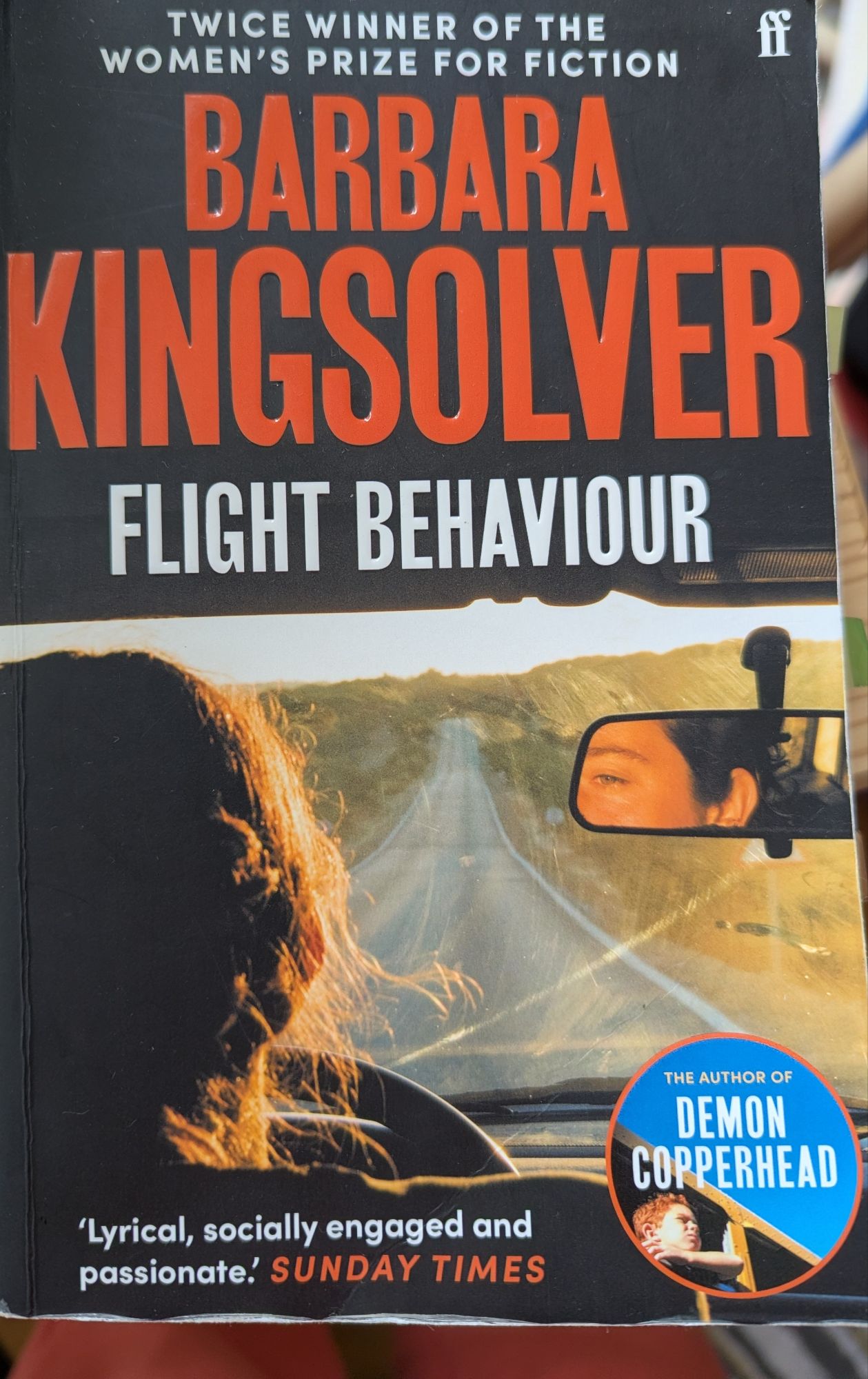
I was a little apprehensive about this book, it did not look like anything I would want to read and 600 pages of something that one does not want to read is beyond the call of duty. My conclusion is simple, although I am unlikely to claim this as a favourite to join me in my tomb, for a book published in 2012 it shows remarkable perceptiveness. It also addresses climate change from the perspective of farming families in rural Tennessee. The family of Dellarobia Turnbow, her husband Cub, their two children, Preston and Cordie, and the dog, Roy, who live near to the fictional Feathertown – a place that we can all imagine. Nearby live Cub’s parents Hester and Bear who own much of the forested land as well as property.
New arrivals, new thinking, new opportunities
Times are really hard on the farm, not least because of the relentless rain. Unusual but increasingly common because of climate change. Our protagonists are not wholly aware of the causes, only the effects. Bear decides to cash in on the wood in his forests after a lumber company offers him money to clear it. He agrees to wait until the butterflies have migrated before the felling starts.
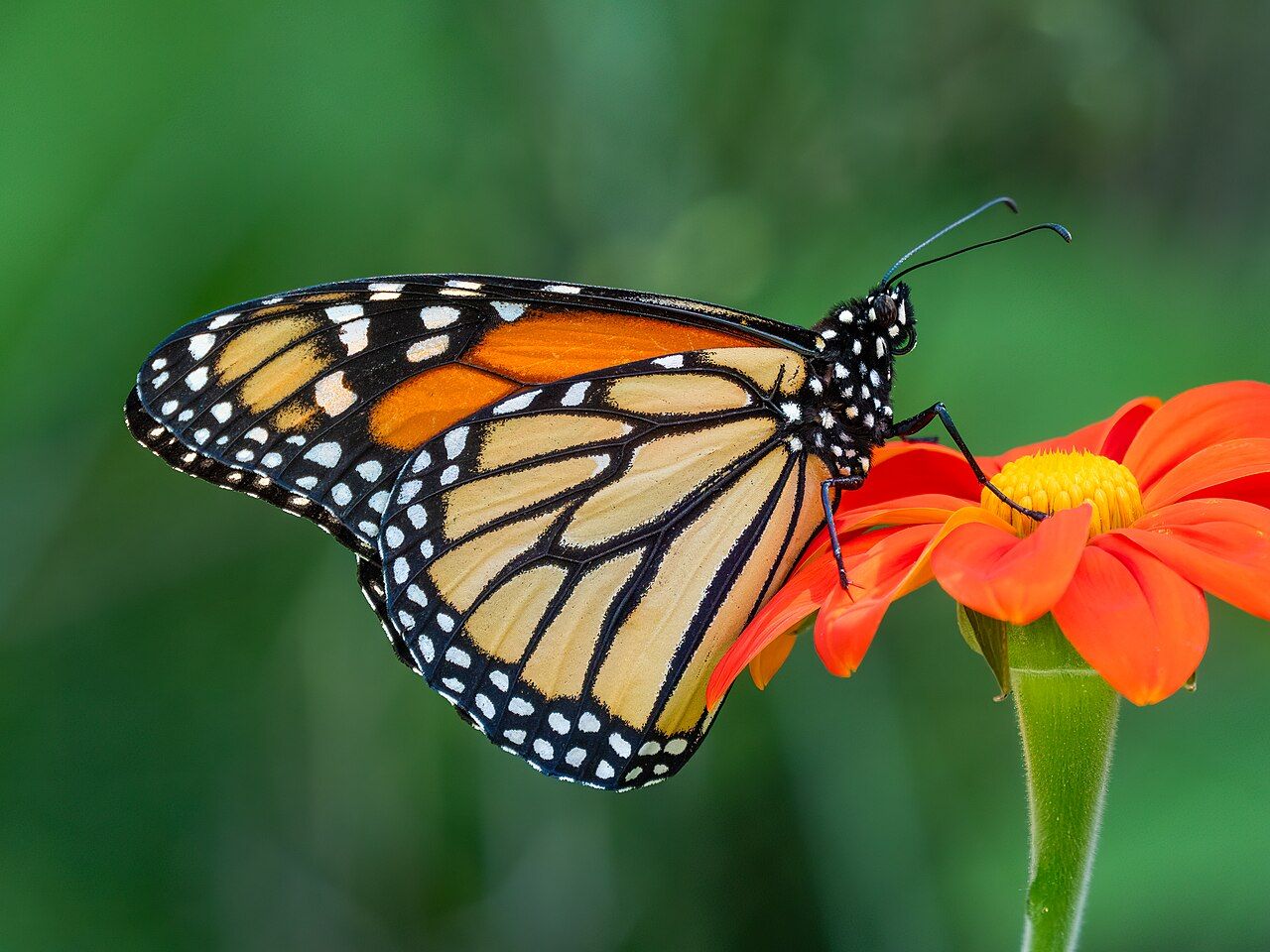
Central to the exploration of the changing lives of of the characters is the unexpected arrival and discovery of a huge population of Monarch butterflies (below right) in the forest. On seeing them for the first time by accident, Dellarobia has somewhat of an epiphany as she and her son become obsessed with the lives and survival of the butterflies that are normally expected to over-winter in Mexico. We learn that the habitat in Mexico has been destroyed, hence the unexpected migration.
Dellarobia becomes somewhat of a local celebrity and the spectacle becomes an attraction which Hester and Bear try to monetise unsuccessfully. The television media (News Nine) take a particular interest (pp274-288) and journalist Tina Ultna exploits a naïve Dellarobia through an interview in which she reveals that she went into the forest to kill herself (not true, it was to start an affair in the old hunting hut, but the cause was the same, alienation). On seeing the butterflies she realised that she was too focused on herself and not on the wider world including her children. Some weeks later Tina and different cameraman, Everett, came back for a follow up that is much more revealing but less reportable (see below).
A series of visitors begin to change everything. First a Mexican family call on them (pp132-142). The child, Josefina, is in Preston’s class at school. The parents Lupe and Reynaldo are not so proficient in English. They come and request to see the butterflies. They do, of course, have a parallel experience of being displaced from Michoacán (Angangueo) like the butterflies (it is a bit of a crude rhetorical device, but there are quite a few of these in the book). Indeed, they used to be guides in the forest for visitors coming to see the butterflies, such a spectacle they are/were. But then came the flood. All was gone. Be under no illusions on this point as the novel progresses.
The most significant visitor is a scientist called Dr Ovid Byron (pp143-174) who changes everything for the family. He is a 40 something tall and handsome black man and drives a rented orange VW Beetle. In an exchange with her closest friend, we get the following:
“Wait a sec,” Dovey said. “He flew across the whole damn country and drove to your place to see butterflies?”
“That is correct”
“Did he seem, I don’t know, insane?”
“How would I know? I spend my whole life with people that want to eat thumbtacks off the floor.”
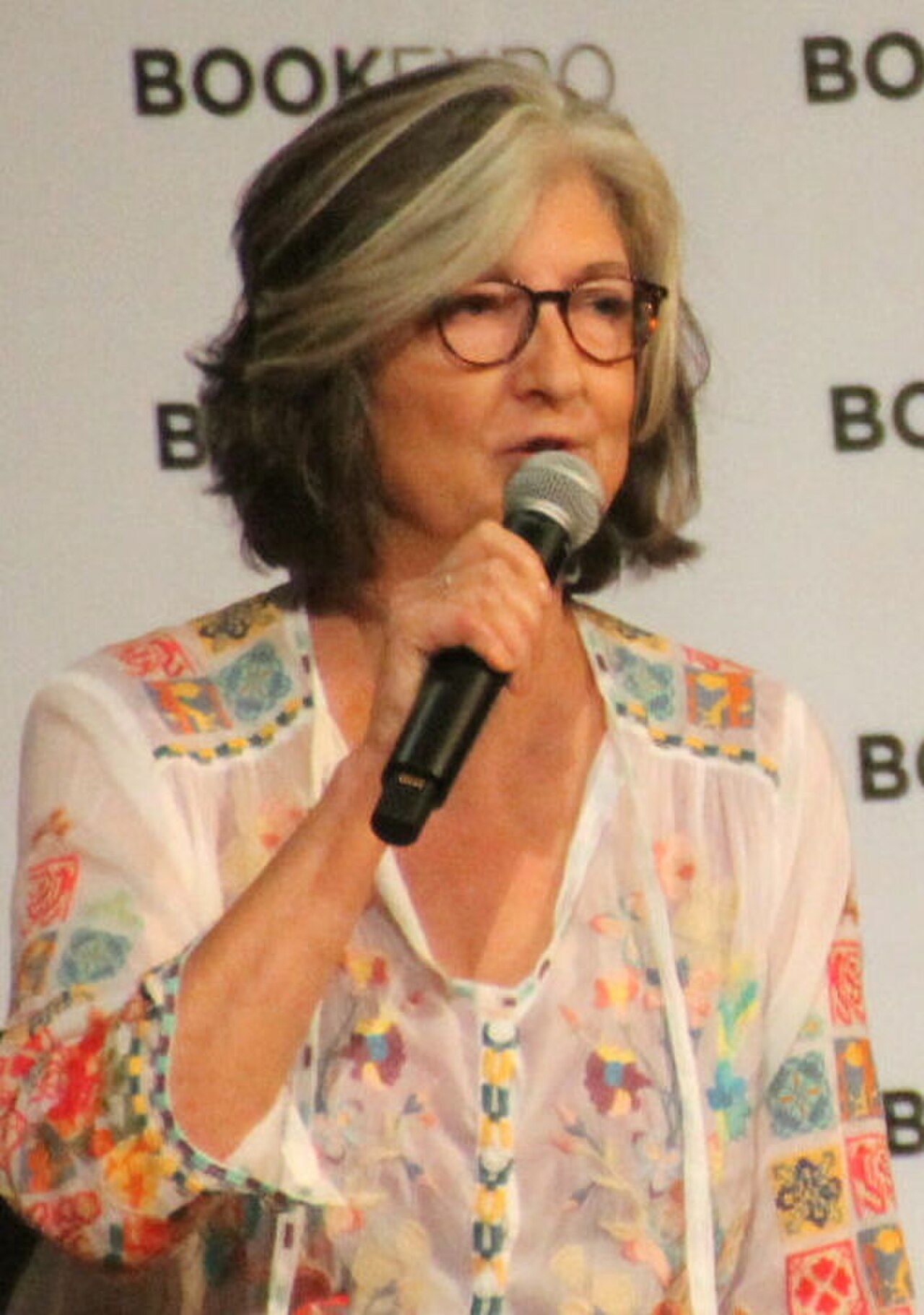
Without hesitation she invites him for supper with the family after coming back from the mountain to look at the butterflies. Dellarobia likened him to Sidney Poitier because of the movie plot. At supper he charmed both Dellarobia and Preston. Dellarobia was amazed to find that scientists exist that specialise not only in butterflies, but to these butterflies. So much so that she progressively learns from Byron not only about Monarch butterflies but natural history more widely and the impact of climate change, a subject that was something they were living through but where the trust, ultimately, was in the hands of God. Preston, equally becomes beguiled by this stranger whose knowledge he can aspire to in a way that his mother, and particularly his father, cannot.
From this moment on, Dellarobia and Preston are different people. Cub is different because of the impact of Byron on his family. For a matter of weeks, Dellarobia is employed by Byron along with a research team of Mako, Bonnie and Pete (who lodged nearby) plus local and not-so-local volunteers, many of whom are hardy souls living rough in the forest throughout the winter – albeit a mild one. Byron himself lives in a mobile home parked on the farm and an outbuilding is converted into a laboratory, for a rent of course. Dellarobia’s employment on her own terms provides her with a small income that enables a degree of autonomy and the ability to provide a few of the presents that she has wanted to buy her children but couldn’t. But more important is Dellarobia’s education – learning by doing. Everything from counting, sexing, measuring, looking out for food sources and signs of flight. She realises that human life is intertwined with that of the natural world and humans’ impacts not only lead to extinctions (Byron believes that they are watching a species extinction) but hardship for human beings as well. Farming becomes uncertain; security, too, and migration becomes necessary for those whose habitats have changed so much that their lives cannot be sustained there.
Ephemera
Perhaps one of the most telling chapters, Chapter 11, is the visit to a very large second hand store in the nearby town of Clearly visited by Dellarobia, Dovey and the children. The shop is a magical place full of useful stuff ranging from bedding to toys, homeware to clothes, bicycles to books, aquariums to wigs, and so on. All at exceedingly affordable prices. The merchandise largely comes from house clearances, but the symbolism of this extended chapter speaks volumes. It tells us that:
- There are a lot of poor people, (even) in modern America
- Used stuff has value
- We are reflected in all of the things we own; we reveal our identities often after death
- It lays bare the possessions that humans acquire through life
- [resale] is a metaphor for genetic mutation (p439)
- There is such a thing as society (even in highly individualised societies, or maybe particularly in such societies)
- People come together to trade, exchange, commune and replenish.
Media culpability
And so to the second encounter with Tina Ultna and cameraman, Everett (pp498-510). Again, arriving without warning, Dellarobia (with Dovey) takes her to meet Byron, a man who is not keen on talking to the media about his work. After some goading he lets Tina have copy, but not of the kind she wants or expects. This is a long exchange, but here is the critique of media coverage of the climate crisis:
“…What is your name again?”
“Tina Ultna,” she said in a different, off-camera voice.
“To see only beauty here is very superficial. Certainly in terms of news coverage. I would say it’s off message.”
“You’re saying there’s a message here? And what is that?”
“…After a long pause, Tina tried again. “Dr Byron, something new is happening here. Most of us are struck by the beauty of this phenomenon. But” she cocked her head theatrically as if burdened by a keen insight – “do you think it might possibly be a sign of some deeper problem with the ecology?”
“Yes!” Ovid cried. “A problem with the environment is what you are trying to say. Pervasive environmental damage. This is a biological system falling apart along its seems. Yes. Very good, Tina Ultna.”
“And briefly, Dr Byron, tell us the nature of the problem.”
“Briefly? Unseasonable temperature shifts, droughts, a loss of synchronization between foragers and their host plants. Everything hinges on the climate.”
She blinked a couple of times. “Are we talking about global warming?”
“Yes, we are.”
Tina made a downward wave at Everett to stop the camera, and bizarrely her own animation clicked off too, her face slack as she walked across the lab, maybe starting to feel homesick for her average flaming interstate wreck. Tina checked something on the camera, then walked back to her interview spot and spoke in a subdued voice. “The station has gotten about 500 e-mails about these butterflies, almost all favourable. Is this really where you want to go with this segment? Because I think you’re going to lose your audience.
Ovid looked genuinely startled. “I am a scientist. Are you suggesting I change my answer to improve your ratings?”
Byron gets angrier as the dialogue progresses. It ends with Byron telling Tina that humanity has been drifting for decades but now we are at Niagara Falls in a canoe. Tina responds by saying that at least if this was Niagara Falls “I’d have a decent background.” On they go. Byron tells Tina that she is part of the problem, dancing to the tune of her sponsors and not doing real inquiry.
All the while, Dovey was recording with her phone. She had an unedited version of the exchange and very quickly it was on the internet.
Religion
Religion, of course, plays its part in the story. This is a religious community. Though there is a lot of doubt. Hester gave up after a miscarriage (not her own but she had given up a baby for adoption) and labelled Dellarobia a 9/11 Christian, “in the event of an emergency, call the Lord” (p82). The local pastor, Bobby Ogle, was an attraction beyond Feathertown and is more than a cleric. He set up his own “no heller” church. He could look past petty things. “[H]e was not into things of this world. Just love.” He also takes a role of mediating the change for and amongst those in his congregation. So much so that he has a significant influence over the fate of the trees once the butterflies have gone.
After church (chapter 13) the family meet Pastor Ogle in his office to discuss the logging contract. Not before, however, having sung “Oh this earth is a garden, the garden of my Lord, and He walks in His garden in the cool of the day.” amongst other references in a distinctly organic sermon. Surprisingly it was Cub who started the bidding pointing out the potential for mudslides and contamination of the well water. Pastor Ogle offered Bear alternatives, including selling equipment (back to the secondhand theme) and how community can help to send work his way (keeping the machine shop open). Bear stayed firm. Then the insults: “Bear apparently at the end of his argument rope, responded by calling Bobby [the Pastor] a tree hugger.” (p556). The Pastor responded with “…what have you got against the Lord’s trees?”
That is not the end of the story, suffice to say Dellarobia and Cub come to an arrangement over their marriage and the duties to their children, but not before a climate-related natural event occurs that parallels the experience of the Lupe, Reynaldo and Josefina. We observe the events with little real surprise. Kingsolver is not the subtlest of writers. It does leave us with a few questions but they are overridden by the change to all brought about by the butterflies as symbols of our own fragilities, vulnerabilities and detachment from the natural world that supports us.
Pictures: Monarch butterfly (Brooklyn Botanic Garden, CCBY-SA 4.0)
Barbara Kingsolver: Terry Ballard – https://www.flickr.com/photos/terryballard/40684622480/
Drought, heat, the summer of 26
Filed under: Environment, Photography | Tags: climate, climate change, drought, Hastings, heat, Luton
Leave a Comment 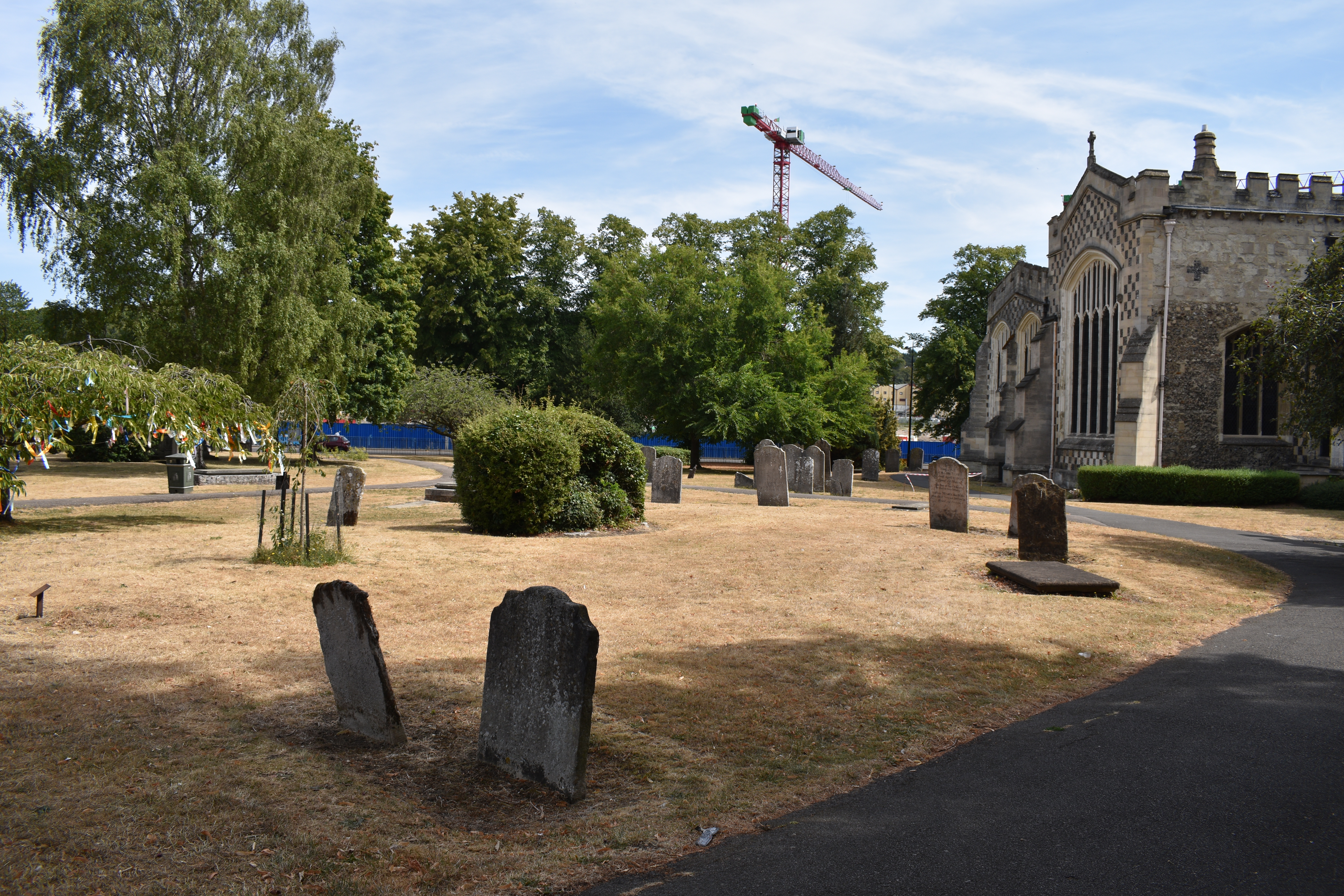
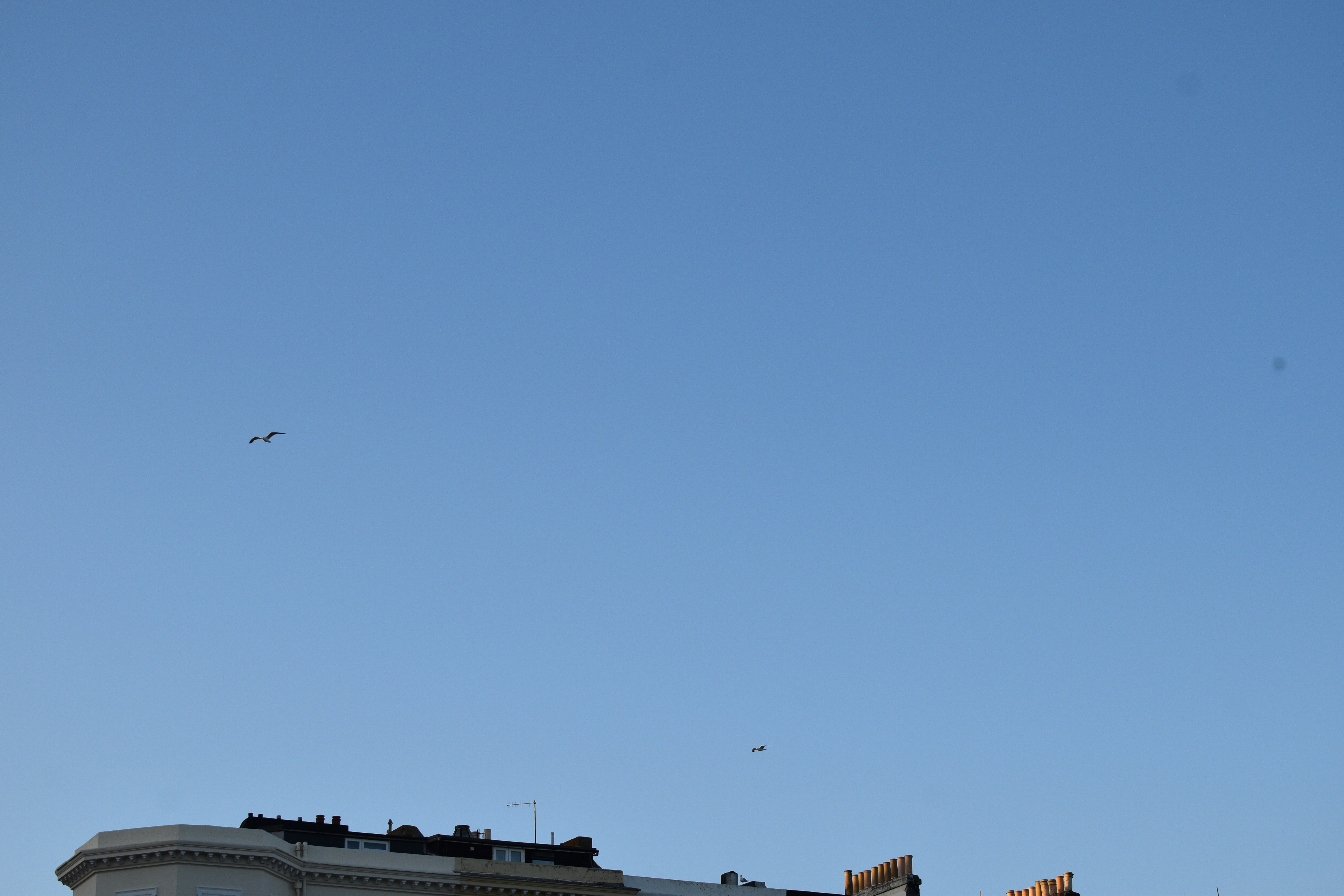
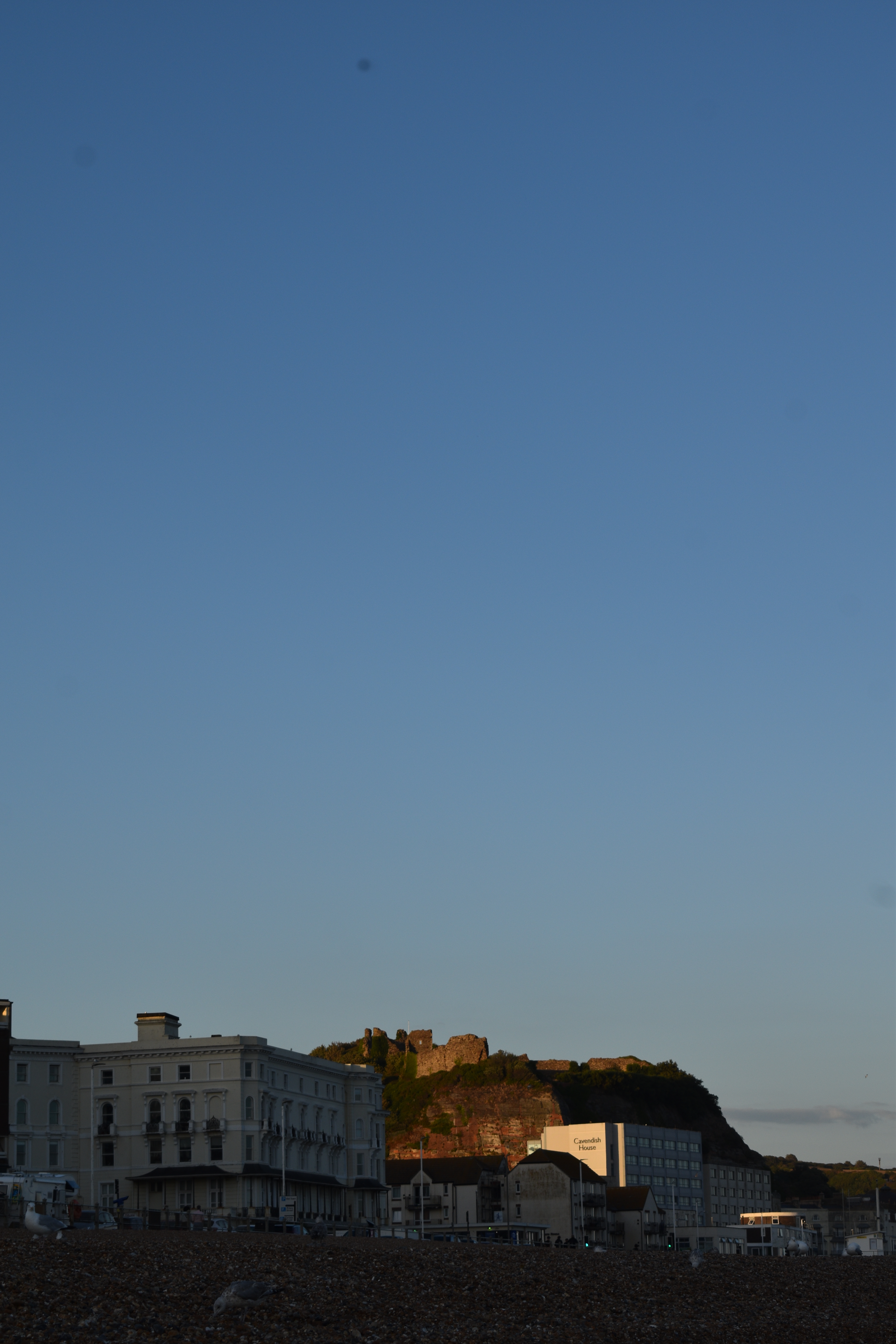
Top left: It is not only the people that are dead, St Mary’s Luton Parish Church, 5 August 2026; Middle: Another cloudless sky, Hastings, 6 August 2026, top right: Sunsetting, Hastings, 6 August 2026.
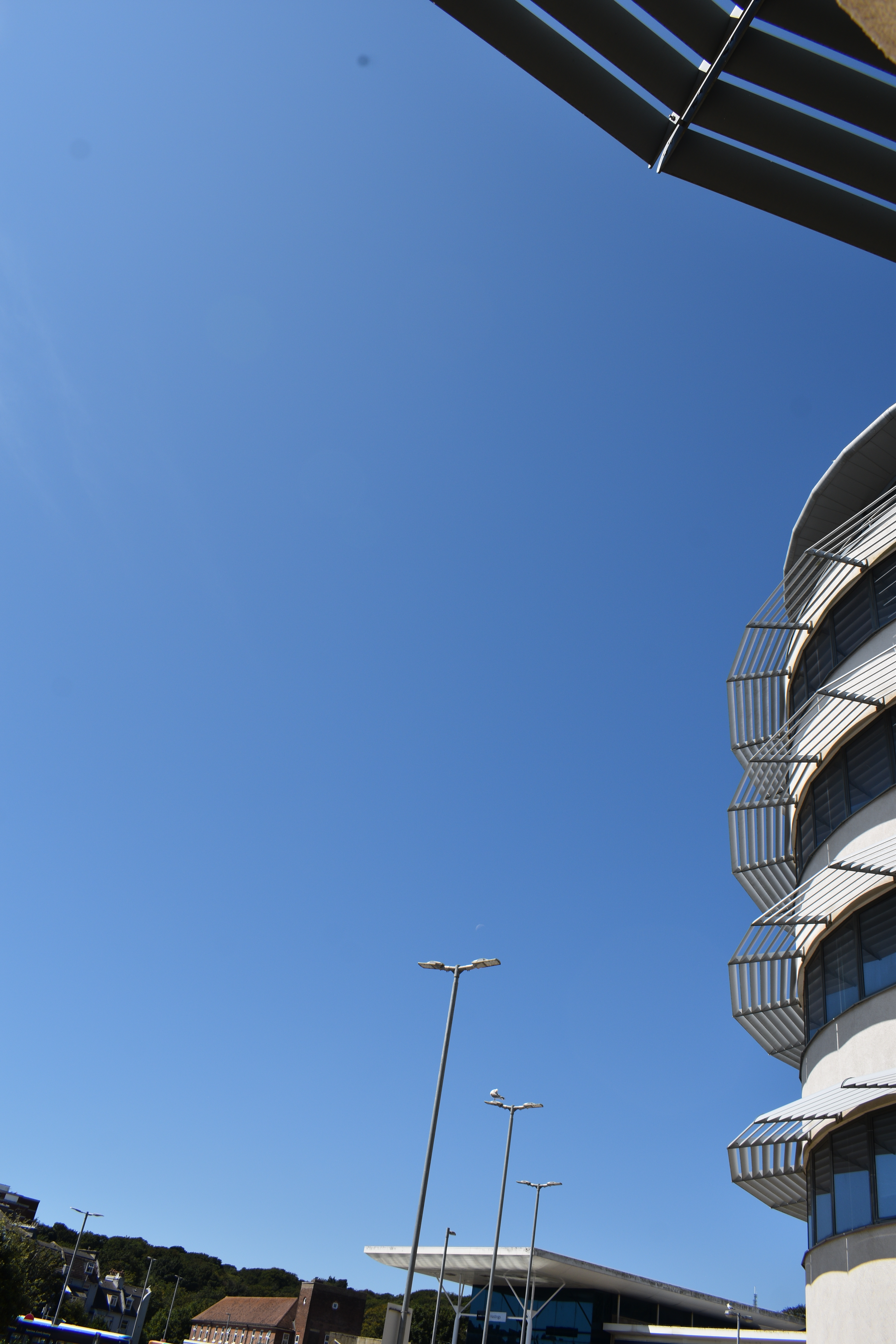
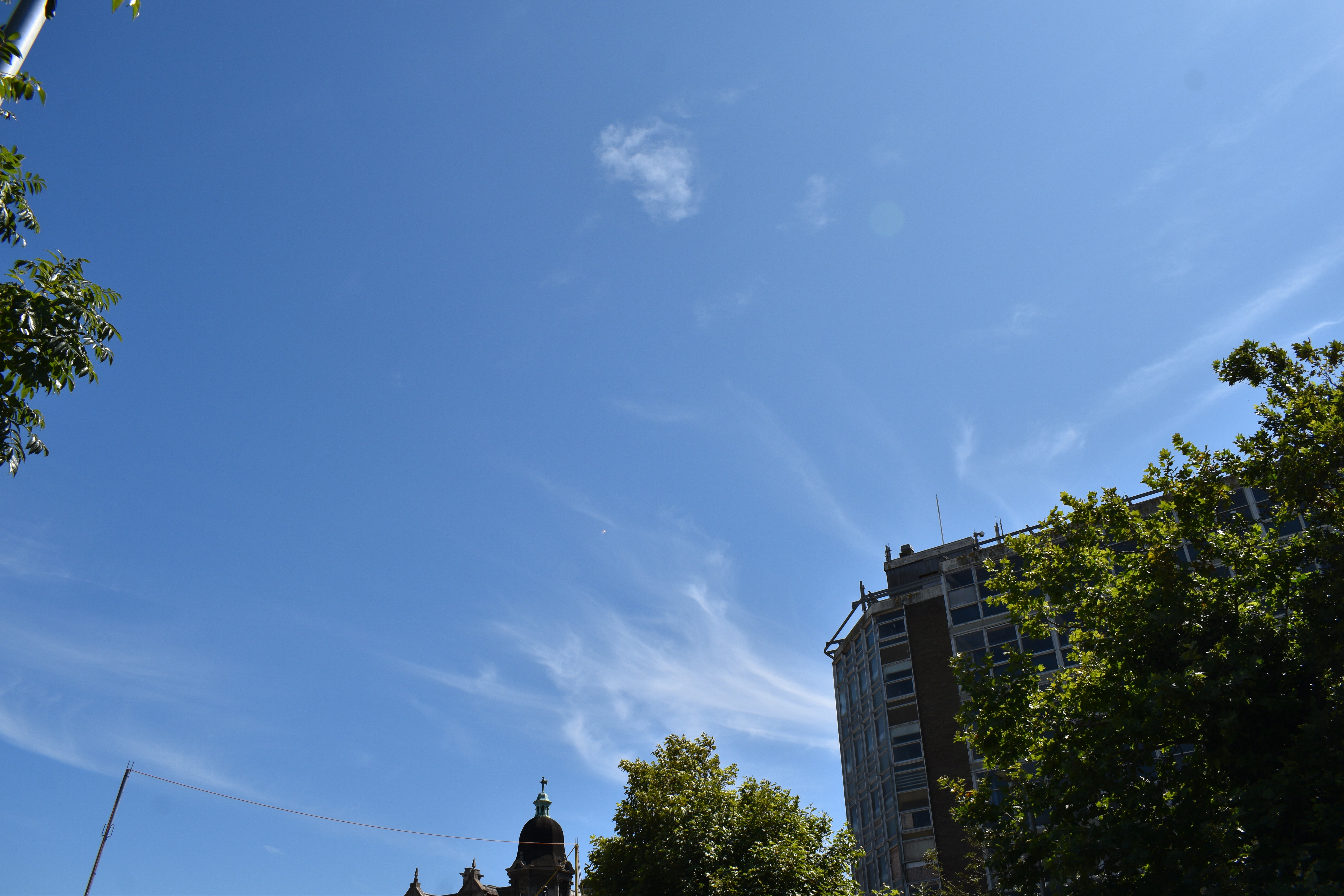
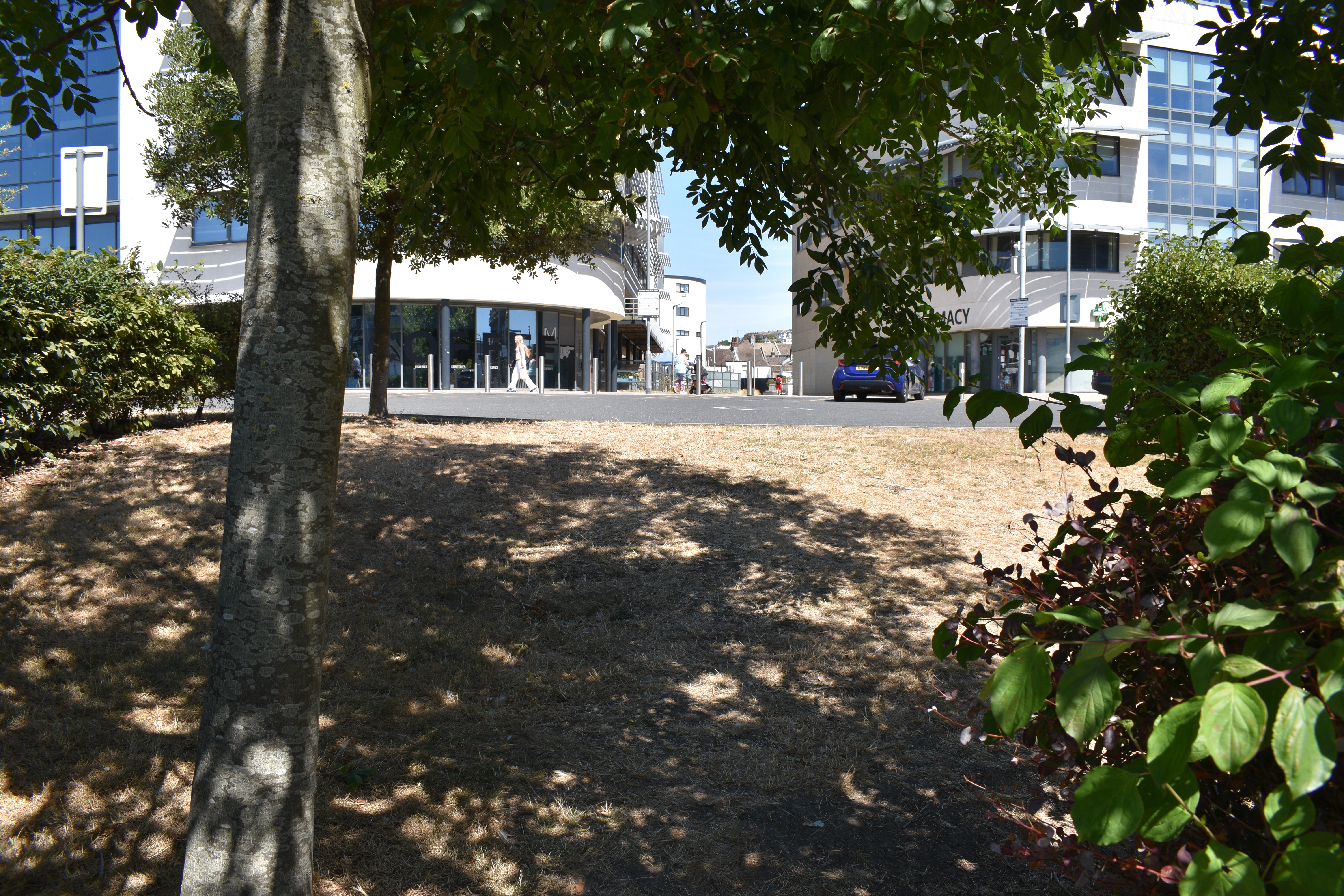
Above left: Let’s get this straight (East Sussex College and Hastings railway station, 7 August 2026); Middle: A shape of things to come (derelict Queensbury House, Hastings, 7 August 2026); Above right: I can see you (Station Plaza, Hastings, 7 August 2026)
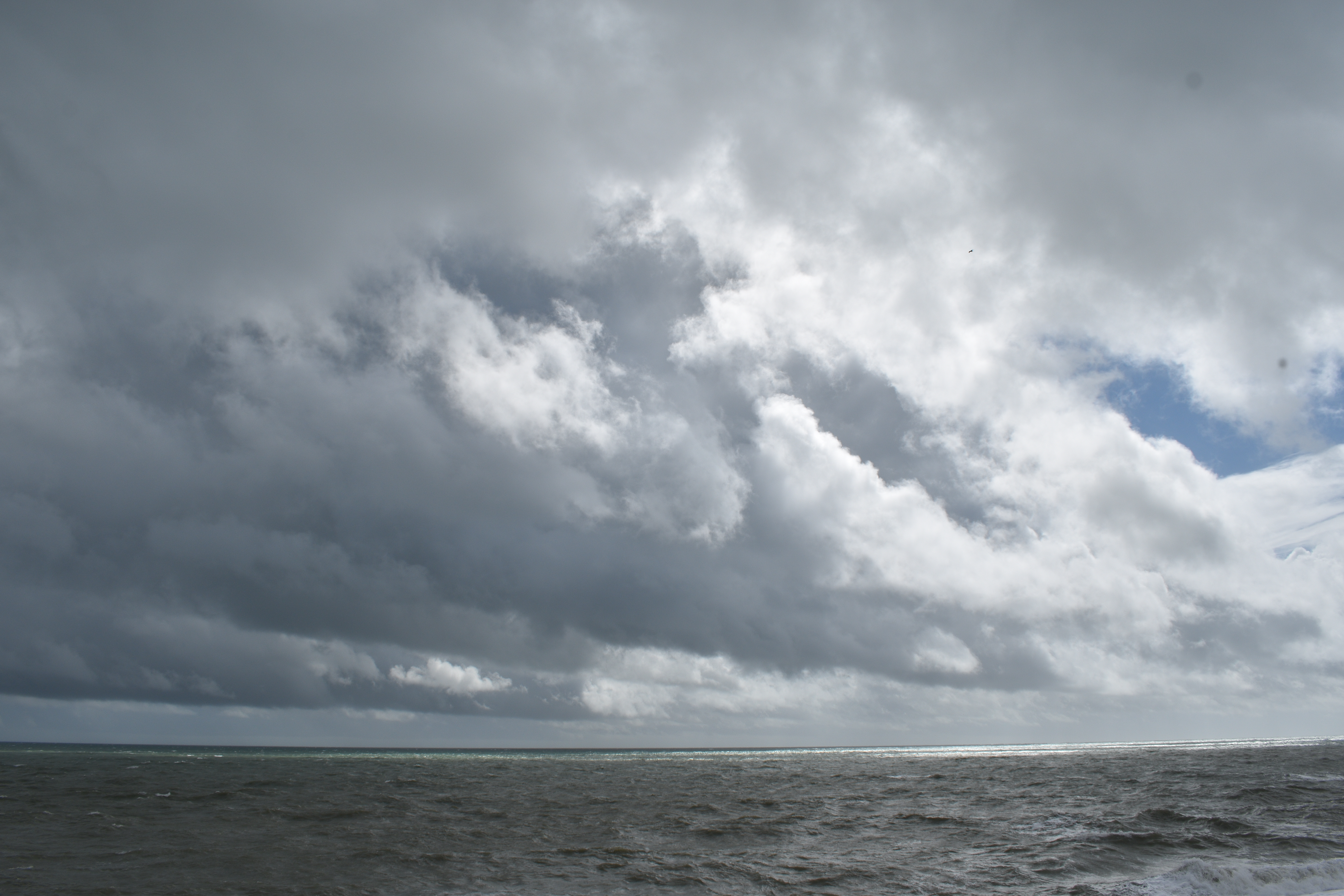
I have drawn on a newspaper headline for Richard Littlejohn in the Daily Mail newspaper. Suitably silly comment but it still has currency as people confuse climate and weather.
Climate, social care and strategy
Filed under: Environment, Food | Tags: andy-burnham, climate change, Ian Dunt, social care
Leave a Comment 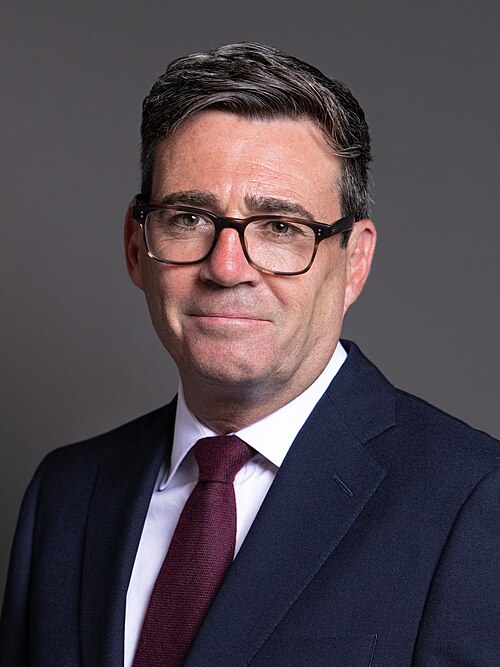
I have just read, as I often do, Ian Dunt’s weekly free Substack, Striking 13. This week’s contribution is called “Jenrick is an idiot sandwich“. Essentially, Dunt unpicks Robert Jenrick’s – as the representative of Reform UK in the absence of Farage – response to Andy Burnham’s approach to social care reform, a policy that is long overdue.
The policy process goes like this:
- Set out the case for reform, particularly drawing on personal experience (Burnham’s father had Alzheimer’s and was looked after in the care system). Make clear that it will involve “hard decisions”, by which is meant, taxation. And also that everyone is impacted; for example, even if we personally do not call on the care system, many will either for themselves or relatives, and this impacts widely on society and hence everyone’s wellbeing.
- Call for a factual debate – appealing directly to the media, particularly the right-wing media, not to poison it.
- Specify the process – bring forward a report on social care by one year, bring together political leaders from across the spectrum to seek out areas of agreement and compromise.
Dunt summarises like this:
You get a pretty decent picture of where we’re going with this. Hold cross-party talks, bring as many parties as you can with you, see what the review publishes, have a big fact-based national debate, then come to a decision and promise to implement after the next election. This would allow any tax rise to be explicitly accepted by voters and outside of the existing manifesto headlock.
Of course, populists such as Reform’s key spokespeople, have no solutions to the big issues of our time. Robert Jenrick was sent out to respond. His approach goes like this:

- Get ahead of oneself and invent a policy, say, a 10 per cent estate tax on the death of property owners.
- Criticise the alleged owner of the policy, in this case Burnham, for even proposing it.
- Instil fear in the hearts and minds of the people by suggesting the tax office will knock on your door before the body is cold to assess the value of the estate and make a claim on it.
At this point, I say, good for Burnham. It has been a heady two weeks since he became Prime Minister and he is showing that he is prepared to tackle difficult policy challenges and a collegiate political way (something that we have not seen in decades). Now I am sat here writing this blog entry on 1 August 2026. I cannot now remember when it last rained in any meaningful way (last week we had about 10 minutes of rain as a cold front crossed the country). There are wildfires across Europe including England and Scotland. Indeed, in England a nature reserve in Suffolk is on fire. Burnham’s response is to hint that he will sanction further drilling in the North Sea. He is quoted as saying on 31 July 2026: “The question isn’t whether Britain will still be using oil and gas, the question is where does it come from.” And again “There is a resource there. When people are struggling, we can’t ignore that. Hence, me indicating that to the president [of the USA].”
These are nonsensical things to say. How many times do these people need to be told that what is left in the North Sea will not impact fuel/energy security and prices in the UK? Oil is traded on international markets. Plus, North Sea oil is becoming higher in sulphur content and is not, therefore, “clean” as Kemi Badenoch would have us believe. Indeed this oil is so valuable that BP has put its oil and gas interests in the North Sea up for sale.
Using Dunt’s framework, what does a mature and factual debate about climate change look like?
- Set out the case for reform, particularly drawing on shared experience (wildfires, stressed infrastructure, heat deaths, flooding/insurance costs, migration, increasing food prices, supply chain disruption). Make clear that it will involve “hard decisions”, by which is meant, lifestyle change. And also that everyone is impacted; for example, there is nowhere to hide from the impacts, and even if one is in the later stages of life, your children and your grandchildren, or those of friends and family, will have to live with the consequences of us not confronting the crisis.
- Call for a factual debate – appealing directly to the media, particularly the right-wing media, not to poison it. Build trust in scientists and develop an understanding amongst all about the science of climate change. Explain why the UK’s current level of emissions are not the whole story. The emissions from the start of the industrial revolution that stared in Britain are still in the atmosphere and belong to the nation. Debunk the argument that North Sea oil and gas can reduce domestic fuel bills. Call on the BBC to drop false equivalence and invest in factual programming and drama alerting people to the hazards and their responsibilities as citizens. Regulate properly media with a mission to propagate and diffuse misinformation.
- Challenge the position that net zero will cost the country £4.5 trillion by 2050 (it will if business-as-usual is costless and that gas is free) and discuss the costs of not achieving net zero.
Shall we try it?
Pictures:
Robert Jenrick: ©House of Commons / photography by Roger Harris
Andy Burnham: © House of Commons – https://members.parliament.uk/member/1427/portrait
Book Review – Ecotopia by Ernest Callenbach
Filed under: Book reviews, Environment | Tags: book review, books, Callenbach, dystopia, Ecotopia, fiction, writing
Leave a Comment 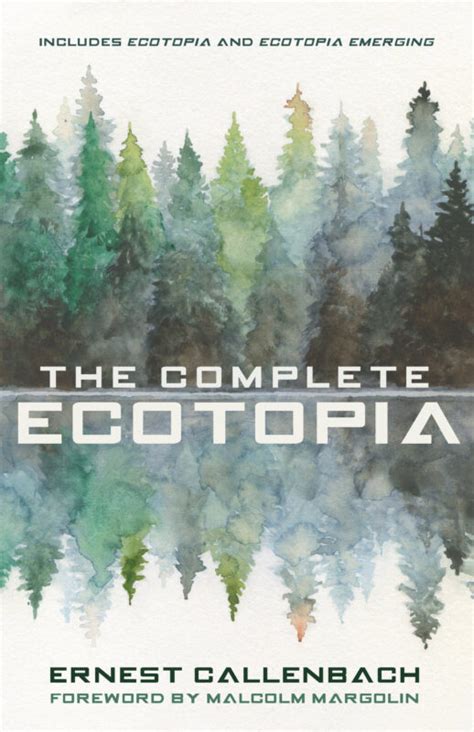
This book has been sat on my bookshelf for two or three months. It is a shiney new edition that features an informative foreword by Malcolm Margolin (his publisher) and the prequel, Ecotopia Emerging (which is not being reviewed here). If you are planning on reading this book, read this entry no further. There are many spoilers.
The book was first published in 1975 – that is significant because many of the technologies that were clearly aspirant at the time are now at the forefront of the transition; for example, heat pumps and videophones (albeit wired). There is no plot as such. Everything revolves around the unlikely scenario that two-and-a-half states in North America split from the USA to create Ecotopia. These were Washington State, Oregon and the northern part of California (including San Francisco but not Los Angeles).
It is a closed and protected society such that only now is a New York journalist, William Weston allowed to enter to experience life in Ecotopia. He is, however, much more than a journalist. He is an agent looking for intelligence on how to re-unite the states.
There is a lot of hippie nonsense in the prose and the conceptualisation of Ecotopia. That said it is a more faithful manifestation of hippie-dom than what perhaps transpired. The eco-utopianism in the novel arguably could have been realised, but instead the utopianism transmogrified into libertarian silicon valley technological determinism. Callenbach obviously saw the opportunity, but as is so often the case, humanity chose a different direction when confronted with an inadequately signposted fork in the road.
Economics
So what does Ecotopia look like? The economic model is not easy to define exactly. It is still capitalist but it is mixed. There is much regulation, particularly about fuels, materials, housing, etc. There are no cars – though bicycles and electrified public transport including, remarkably, high speed trains, are abundant. There are some diesel trucks used for logging that simply have no substitute at this point in time.
Food and land are very important in this economy. Forests were – are being – reforested, though wood has become, once again, the main and favoured building material. Forests are managed sustainably, there is no clear cutting for lumber. It is not a vegetarian world, but the meat is not intensively reared. Some of it is hunted; deer, for example. What is true is that there is no shortage of food. There is a universal basic income, but most Ecotopians regard it too meagre to exist on. In the employed economy, the working week is 20 hours. That is generous, even by modern thinking on the relationship between work, leisure and volunteering. There is more functionality in this world – all consumer gadgets are mendable, and the people are taught – starting in school – to do the mending themselves. Universities are run by academics, but students can determine who gets employed as it is their fees that pay salaries. University education is often seen as an end in itself. It is a life experience worthy of investment. This may explain why many Ecotopians are experts in arguing esoteric concepts!
Ecotopia has a sophisticated science-base, so much so that scientists have discovered and businesses have commercialised bio-degradable plastic. This can be used for both packaging and for modular housing. Now there is a thought. There are factories extruding plastic for building purposes. Though not all Ecotopians are in favour, it is still plastic, after all. Much research is done in small research institutes located near universities. There is innovative work taking place that probably would not be funded in the USA; for example tapping electrical energy from algae (the inventors won a Nobel prize for their work). Research, however, is focused on practical/scientific disciplines. There is no room for the social sciences – political science, sociology and psychology. Though there is, interestingly, room for philosophy. History also survives much of it focused on pre-independence research (maybe to justify the independence rationale).
After independence, there was a flight of capital. The state had to nationalise farms, factories and retail. They ultimately brecame cooperatives, owned by the workers. Inheritance of property was abolished. The core tax is corporation tax – the state claims a percentage of output and invests the proceeds in public goods. There is also a land tax (p95). Imports attract very high tariffs to ward off competition from Asia. This does facilitate the circular economy; for example, people wear home-made clothes rather than buy low-price, low quality garments from abroad.
So, the circular economy exists in this world, and seems to work such that it is accepted and embraced. Ecotopians consume much less than their US counterparts. It is also degrowth which includes a falling population. In order to limit pressure on resources, the Ecotopian government initiated a fertility programme largely focused on women, birth control and access to abortion clinics. More economically, Ecotopia evolved a less-consumptive economy through decentralisation of power, taxation, health, education, agriculture and appropriate-scale food production more generally.
People live in mini-cities. It reminds me very much of the modern concept of the 15-minute city. Everything is within reach geographically. Though there are other Ecotopians who live in communes/forest camps on the land (p53). A family could be as many as 20 related and unrelated people who share space, domestic tasks and childcare.
Energy and law

There are no coal-fired power stations. There remain a few fission nuclear power stations, but these are increasingly seen as unsustainable because of the inability to deal safely with radioactive waste. There is geothermal, hydro, solar, “earth heat”, tides and wind. The sea thermal plant in Punta Gorda takes heat from the ocean passes it through heat exchangers to extract the heat that can be used for heating and presumably electricity generation.
The criminal justice system (pp89-90) is also noteworthy. Penal institutions exist and sentences are long – though there does not seem to be capital punishment. Inmates work (forced labour as described by some). There is a different hierarchy of crimes in Ecotopia. There are no laws against prostitution, drug use and gambling (these are seemingly “victimless crimes”. White collar crimes such as embezzlement, fraud, collusion, and similar, are treated as severely as assault and robbery. Likewise for deliberate pollution of air and water.
There is a pro-USA underground movement (p50-52). Weston meets a couple of representatives in his hotel. But nothing comes of this encounter, though the Ecotopian (counter)intelligence service is aware of that meeting (p63). In the end, Weston does not file his story relating to this encounter.
Race
Prior to independence, the three states that now constitute Ecotopia were racially mixed. Since independence, there is segregation after the black population sought to gain their own independence. Areas of San Francisco and Oakland (known as Soul City), have become city states with their own currencies, postage stamps and language (Swahili is increasingly spoken). Only international affairs are managed by the central Ecotopian government/state. More disturbing has been a proposal to move black populations, for example in Monterey Bay and Salinas Valley, into the black city states to free up valuable agricultural land. It is noted that people in the black city states earn more money largely because they work longer than the 20 hours than people in Ecotopia.
Media and communications
Ecotopia, on independence, broke up media conglomerates. Ultimately, ownership was limited to one media outlet per city. If a corporation retained the TV station, then it could not operate parallel newspapers and magazines (there is no social media in 1975 Ecotopia). Newspapers and magazines thrive despite the divestment.
TV was transformed. Rather than channels for entertainment, they became news and information outlets hosting debates, hearings and committee meetings! This approach perhaps influenced the C-Span model? For news there are no correspondents based in the USA, so the focus is domestic and other foreign affairs (Brazil is a favourite, especially after US air attacks).
Specialist books are printed at kiosks as they are not in print and sellable through book stores.
Sex
There is a lot of it. Especially during four (statutory) holidays, solstices and equinoxes, obviously! By way of a possible explanation, this is a post-1960s free love California influencing Callenbach’s thinking. Largely because women control their own fertility they also seem liberally to have sex with multiple partners. Weston, on being introduced to one of the forest camps, is initiated by being given a bath and having sex with Marissa, his host. Marissa becomes the chief protagonist in Weston’s ecotopianisation, for want of a better word. Sex is also, potentially, fundamental to the healthcare system. As noted, hospital patients are allocated a nurse who stays for the duration. Sex is so connected to wellbeing, it seems to be written into a recovery plan.
All women choose the father of their children. Incidentally, Callenbach is an awful writer of sex and even less good in writing about love (making).
Schools and education
In schools, children are taught to make things. Children also work the land as much as they learn in the classroom; they understand growing cycles, land fertility, harvesting and develop a deep knowledge about flora and fauna. It is a very practical education; they even learn how to operate printing presses! They learn to trap animals, build shelters, make weapons (bows and arrows). Schools are not free of charge (there is a grant system for poorer households). They are private enterprises, though largely owned by the teachers. Children undertake national examinations at 12 and 18 years of age.
Despite the absence of some subjects from curricula, most young people can play an instrument, are artists, dancers, actors, sculptors, film makers, etc. There are no big-name architects because, essentially, everyone is an architect, even if it is only designing a rudimentary shelter. Most communities have their own groups playing music mirroring their ethnicities. They all seem to have a dance beat. Subject captured musically are not too different from other countries – love, loss, etc.
Ritual war games and health
Most societies seem to have some outlet for simulated violence. Sport is the obvious channel for this, particularly between men. In Ecotopia, they have ritual war games which involve two bands of (young) men – maybe 25 on each side – with spears trying to kill one another. It seems a bit like hunting and ends when one man from one of the sides is isolated and then speared, more often than not, non-fatally (it is estimated that there are only 50 fatalities each year – p78, but certainly requiring surgery and hospital recuperation). Callenbach contrasts this number with fatalities on roads annually in the USA by way of justification. With the exception of the victim who is ritually whisked off to the hospital, after period of lamentation by the losing side, everyone feasts at the invitation and provision of the winning side.
The book has two entries involving war games. In the first, Weston is an observer. In the second, he is a participant. It should not surprise readers that he is speared which provides a segue for him to experience the healthcare system first hand.
The health system is, however, free at the point of use. It really is utopian. Each patient is allocated a full-time nurse. It is one-to-one care. There is less need for healthcare because Ecotopia’s air is clean, its water is uncontaminated and food is not sprayed with pesticides (I am pretty sure that Callenbach had read Rachel Carson’s Silent Spring). Doctors are generalists rather than consultant specialists. They are all trained in psychiatry which helps deal with mental health as well as physical health. They are well paid. Intensive care is not well developed.
Defence
There is a sophisticated decentralised armaments industry as well as a successful militia army that is difficult for the enemy to defeat.
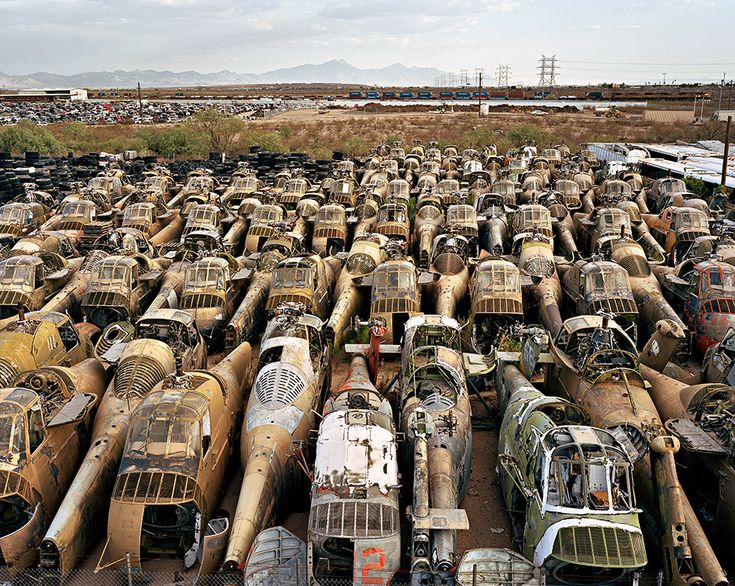
The evidence of that success in defending the independent state is found in a scrapyard in southern San Francisco where over 7000 wrecked US helicopters can be seen (p125). The peace is kept, additionally, by the belief that secret weapons – mines – have been left in US cities and can be detonated should the USA once again seek to invade (New York and Washington DC are named specifically, p4).
Areas of concern
The president is female; the governing paradigm is female. That is not reflected in how women are regarded by Callenbach – who is, of course, the architect of Ecotopia. Weston’s attempt to control Marissa, for example, look familiar. Equally, the nurse performing sexual therapy is surreal to say the least. The male part of the population needs, moreover, ritual violence through its war games. Why is sport not enough? It reminds me of the film, Rollerball, which was also from 1975. Whilst Rollerball’s premise is that the world has reached a corporate utopia, a violent gladiatorial entertainment is needed to keep order and reward compliance. Ecotopia is not a corporate utopia, but it premises the human male “need” for violence.
Then there is the segregation of races. Callenbach sees it not as segregation but as political economy. It is seemingly the case that the black citizens could not realistically embrace a radical Ecotopia, preferring instead to retain more of the trappings of regular capitalism similar to that of the United States.
I am also perplexed and disturbed by Callenbach’s thinking on degrowth, particularly degrowth in the population. And whilst eugenics is not a feature of Callenbach’s Ecotopia, the segregation, closed borders and selective breeding does raise alarm bells. Eco utopias are not necessarily progressive. To be fair, the borders are closed because the USA is hostile neighbour. Ecotopians celebrate victory in their early years over the USA’s invasion attempt (perhaps thinking here about Cuba?).
Towards the end of the book, Weston is kept hostage essentially until he concedes the superiority of Ecotopia over its neighbour (he is a New Yorker with a family and mistress/girl friend there). There is a final twist which is flagged up earlier on when Weston asks Marissa whether she wants to create a family and who she would choose as a father. To paraphrase, she responds by suggesting that he might already know the answer. Weston was always destined to stay in Ecotopia.
(1) The helicopter scrapyard is a picture from Edward Burtynsky and taken from https://uk.pinterest.com/pin/454300681161318244/
Book Review – Elemental by Arthur Snell
Filed under: Environment | Tags: Antarctica, Arctic, Arthur Snell, book review, climate change, Elemental, environment, greenland, Politics
Leave a Comment 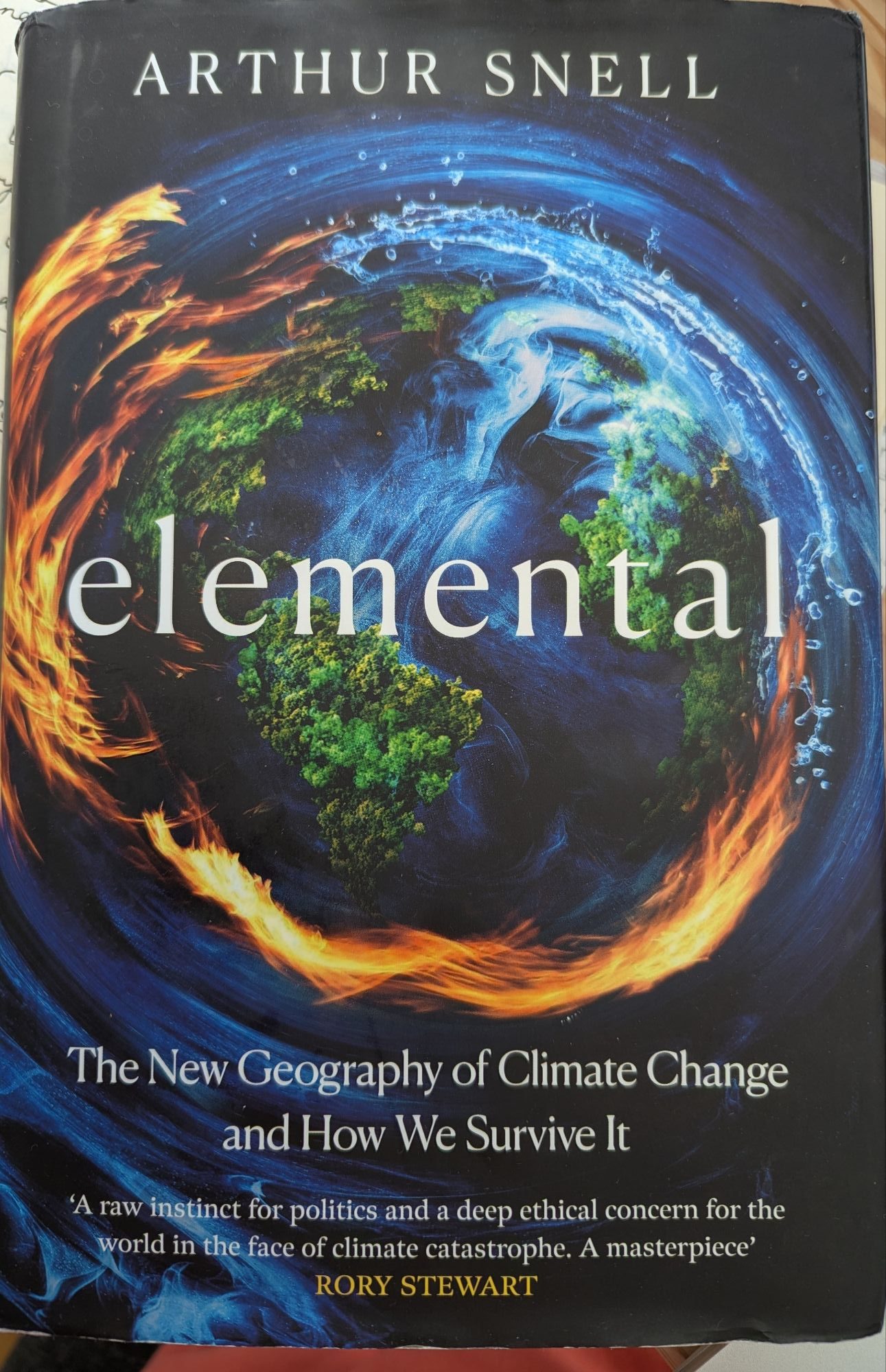
Much of the climate change literature, quite rightly, is based on the planetary sciences – weather, oceans, gases, etc. Arthur Snell, here, provides and important additional perspective, that of geo-politics. Ultimately, if we thought the science was tough enough to comprehend, the geo-politics can only complicate matters. Of course we are talking climate migration, food and fuel security, water (fresh for drinking and agriculture, saline oceans for weather stability and free trade routes).
The book is organised, as the title suggests – around the elements of fire, water, air and earth. This is as good scaffolding as any, I think; it gives Snell the opportunity to share insights from his own diplomatic experiences and new travels and discoveries (revelations, probably).
Readers of this blog may already be well aware of the mechanics of climate change, the IPCC’s periodic reporting and the target of 1.5 degrees Celsius by 2050 achieved only by eliminating the burning of fossil fuels and, unfortunately, some unlikely carbon capture and storage. At one end of the spectrum are poor, low lying countries such as Bangladesh, particularly vulnerable to sea-level rises, erosion, salination of agricultural land, amongst others. At the other end of the spectrum is Trump’s USA in denial about human-caused climate change (I write this section on 4 July on the 250th anniversary of the USA when a good number of events have been cancelled because of extreme heat) and the promotion of fossil fuel exploitation and consumption and the active suppression of renewables, wind, solar and batteries. And then there is the rest of us pulling back from commitments because of a far-right false narrative about cost and impacts on electricity bills and lifestyle.
Worrying highlights
Let’s take Russia. Russia is under stress having opted for an all-out invasion of Ukraine, it has few allies in the West (it is difficult to know whether the USA is an ally, it has to be said). Say what we will about Russia, it does seem to have a more forward thinking approach than many Western countries. For example, The Russian state is watching closely the opportunities for opening up and controlling a strategic arctic sea route. The natural resources currently locked under the Arctic ice become accessible as the permafrost melts. And that secretive and provocative settlement on Svalbard, Barentsburg (Norwegian sovereignty, and a NATO member). Readers wanting to see this, Simon Reeves went there on his Scandinavian adventure. Snell describes it on pages 297-301. The main town on the archipelago is Longyearbyen which serves primarily as a summer tourism base.
For the time being, Svalbard is a demilitarised zone under a treaty dating back to 1925. There may not be weapons on the archipelego, but there seems to be plenty of NATO intelligence equipment linked to the mainland (800km south) by an undersea cable that has already been damaged by, very likely, a Russian “trawler” (page 300). Such cables are also being cut in the Baltic.
China is another actor in this area. Whilst it has no coastline in the Arctic, it is very active in the region. It has observer status in the Arctic Council. It has also built a fleet of icebreakers (the USA has one, apparently). China’s interest in an Arctic passage come out of the insecurity of existing sea/trade routes controlled by hostile powers including Malaysia, Singapore and Indonesia (p308). It is potentially a “polar silk road” to add to the Belt and Road Initiative, amongst others. Clearly Trump’s claim on Canada and Greenland is part of this strategic game (though one wonders whether Trump understands it quite like Xi and Putin).
Since the invasion of Ukraine, Russia looks to the East to sell its oil and gas – China is now the key recipient of these resources. Russia also stays close to China because of arms procurement and the Arctic passage. But there is an even more intriguing reason for the alliance, and that is migration and food security. Snell offers a very interesting insight into how Russian land opened up by the melting of permafrost can become highly productive agricultural land that is particularly attractive to Chinese migrants and for which Russia has too few ethnic citizens to work (p118-9). Crucially, however, there are tensions that go back a long way. In a nutshell, Vladivostok and its hinterland used to be part of China. The port city was Haishenwai before being renamed. Arguably, China wants this territory back.
Just back to international treaties for a moment, Snell signals how jeopardised international treaties are becoming. For example, Antarctica belongs to no one (under a treaty dated 1959), though claims are being staked, as it were, again, as the ice melts and the resources become accessible. It is also a demilitarised region (or unmilitarised). China has four research stations on the island each with military capabilities and functions. The 1991 Madrid Protocol that bans mineral extraction is being challenged. It is up for renegotiation in 2048, let us see if it is not opened up before then. Finally two treaties between China and Russian (Aigun and Beijing) which formalised China’s ceding of territory to Russian may also become life expired.
Obviously I could summarise the whole book at length. It is not the purpose of a review, and I recommend the book to anyone with the slightest interest in geopolitics let alone the geopolitics of climate change. But here are a few more quick highlights:
- Why rice is so difficult to genetically modify (page 40)
- China’s dominance in EVs and the materials that drive them (p67-9)
- Weather control and geoengineering (chapter 10)
- importing PV electricity from Morocco (p169)
- Middle-East oil empires (183-191)
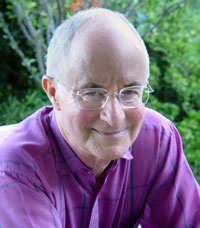
Photo: Arthur Snell from https://tinyurl.com/3y6mrusm
Modern world
Filed under: Photography | Tags: Hastings, Magritte, Pasing, Photographs, Theatron
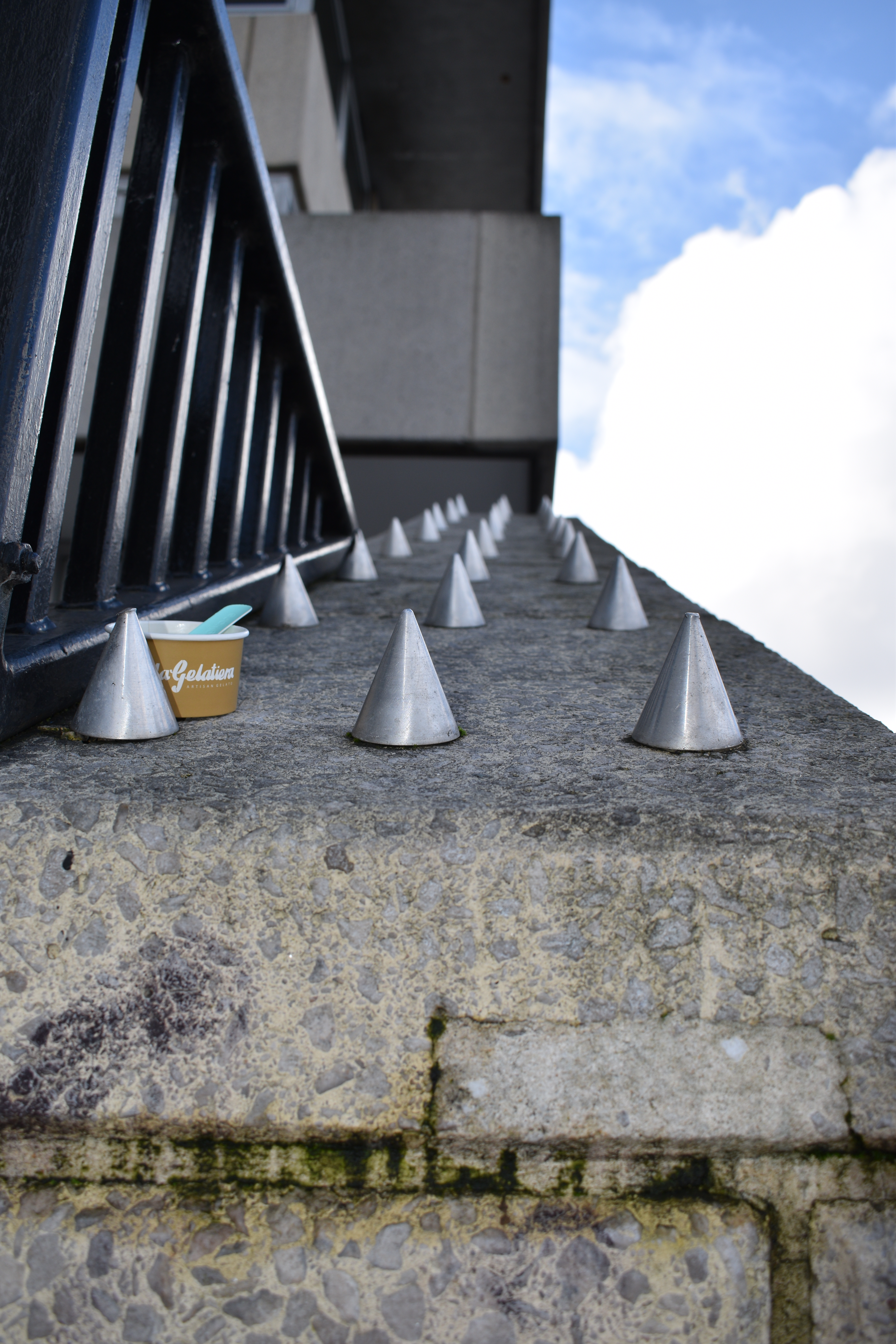
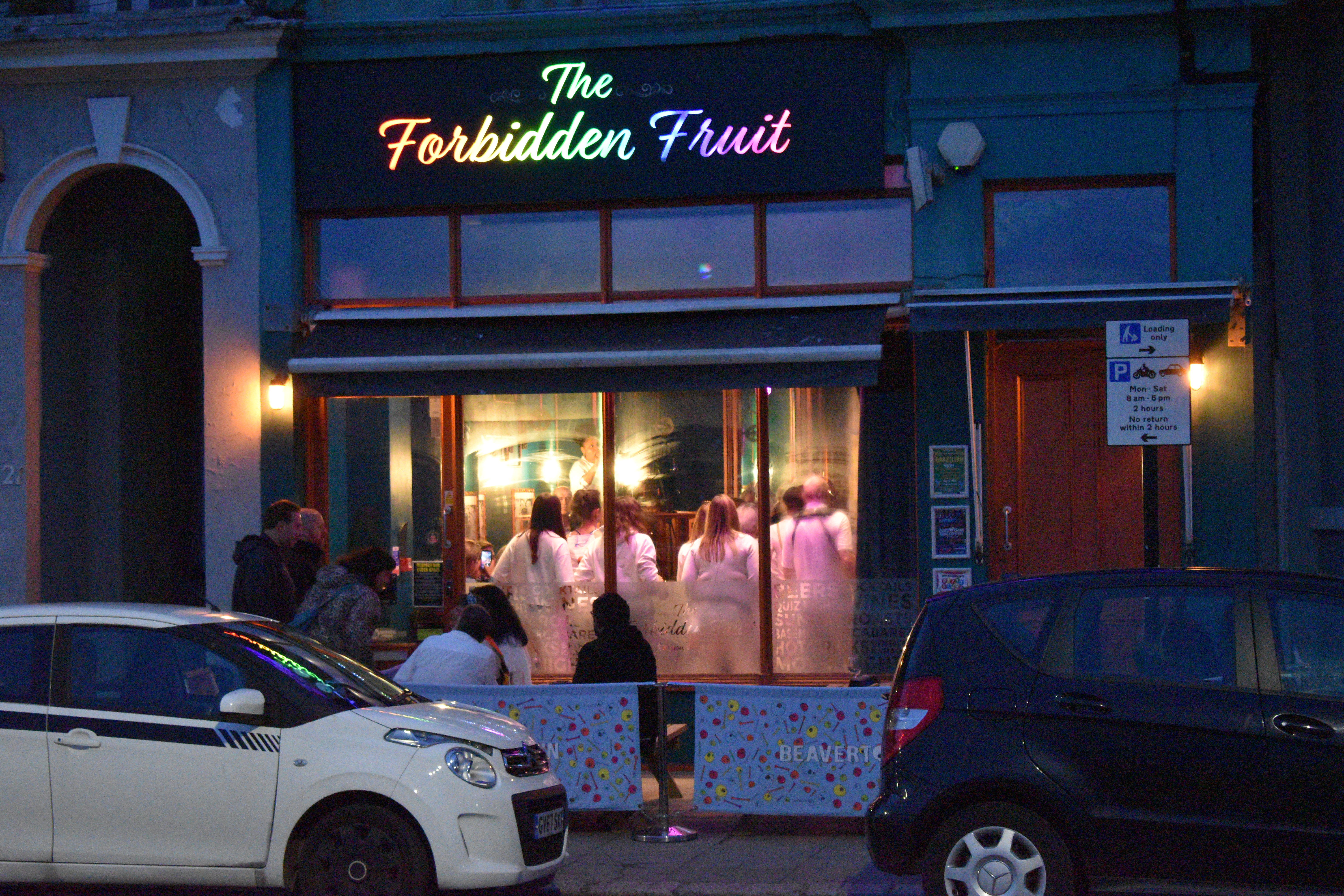
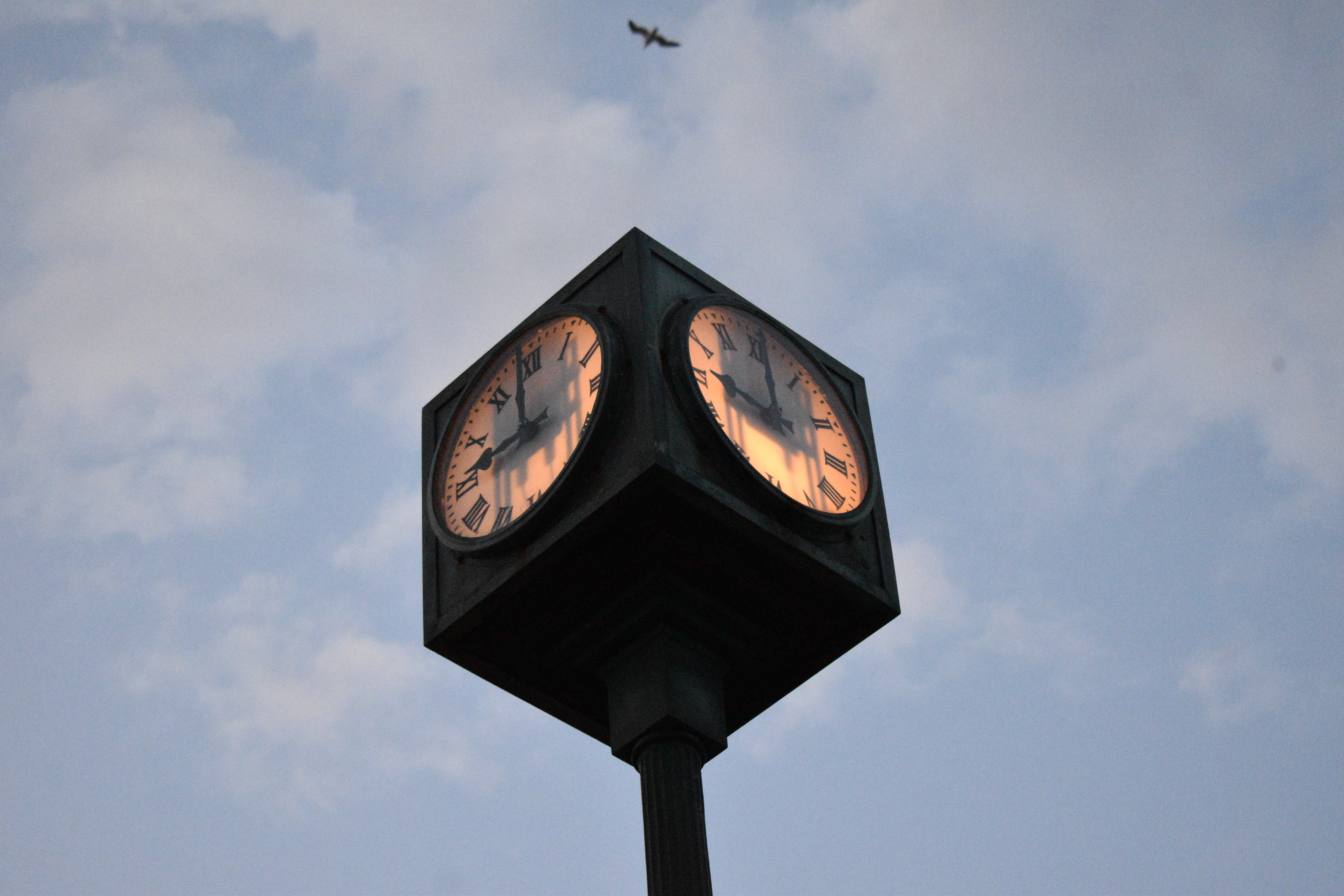
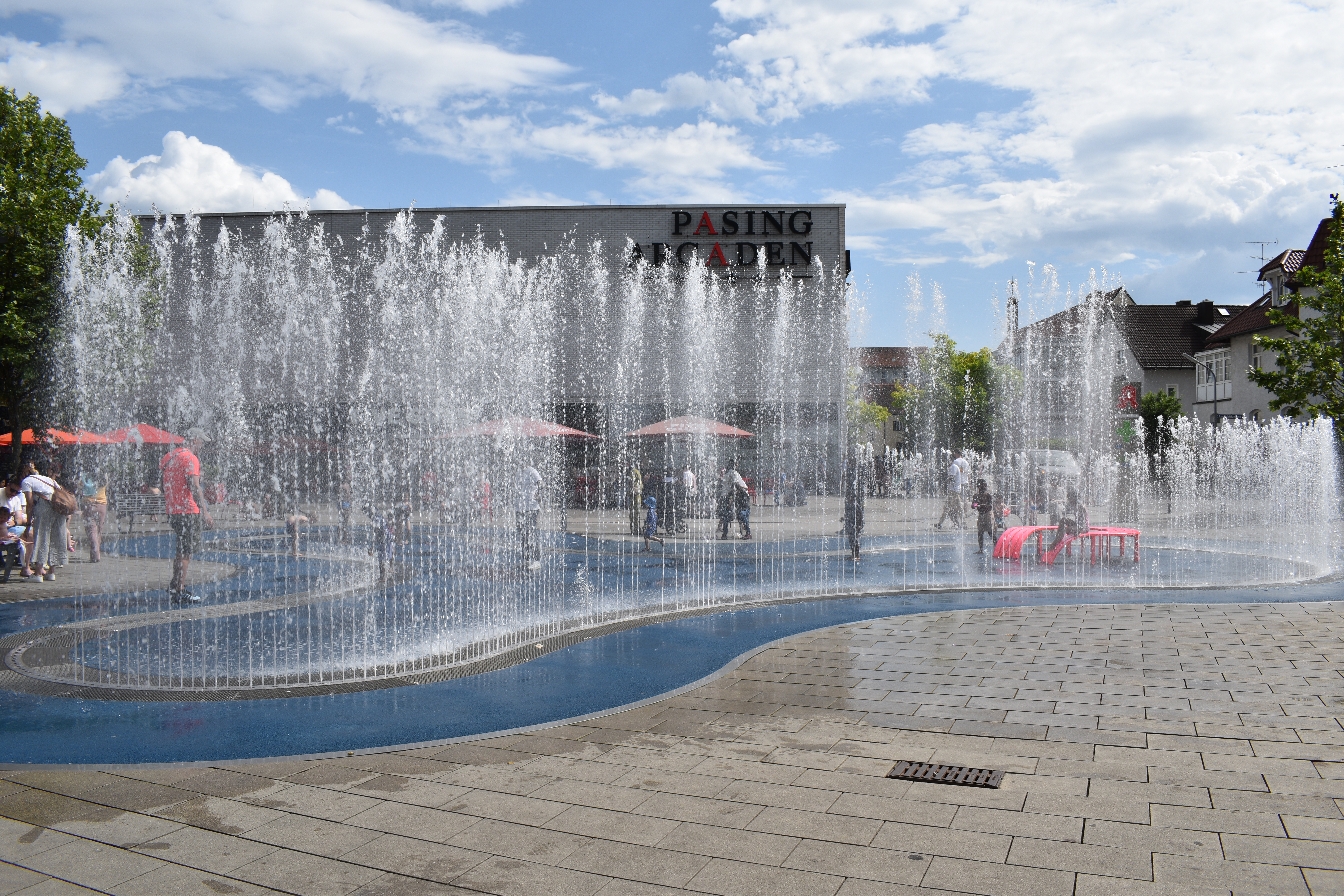
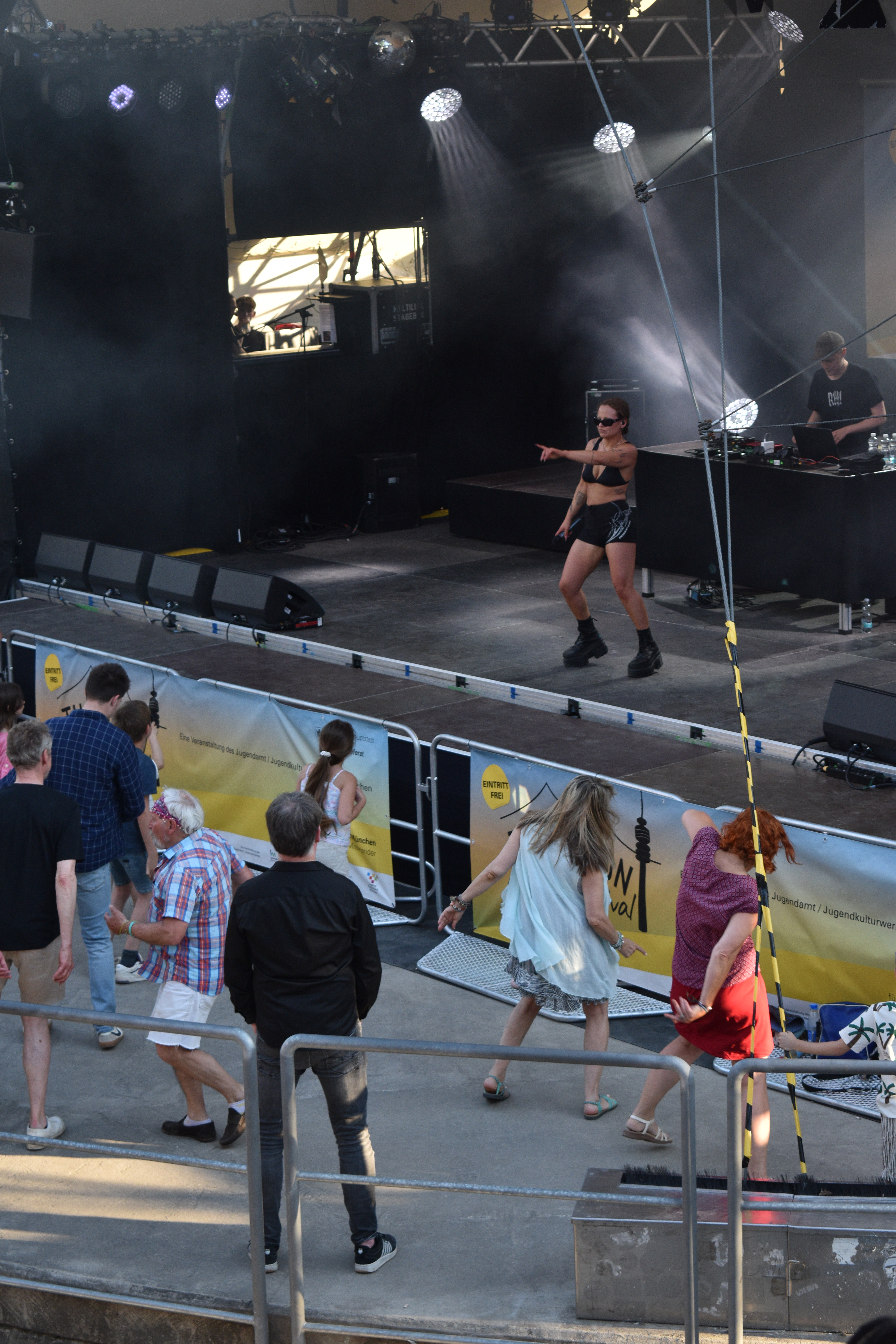
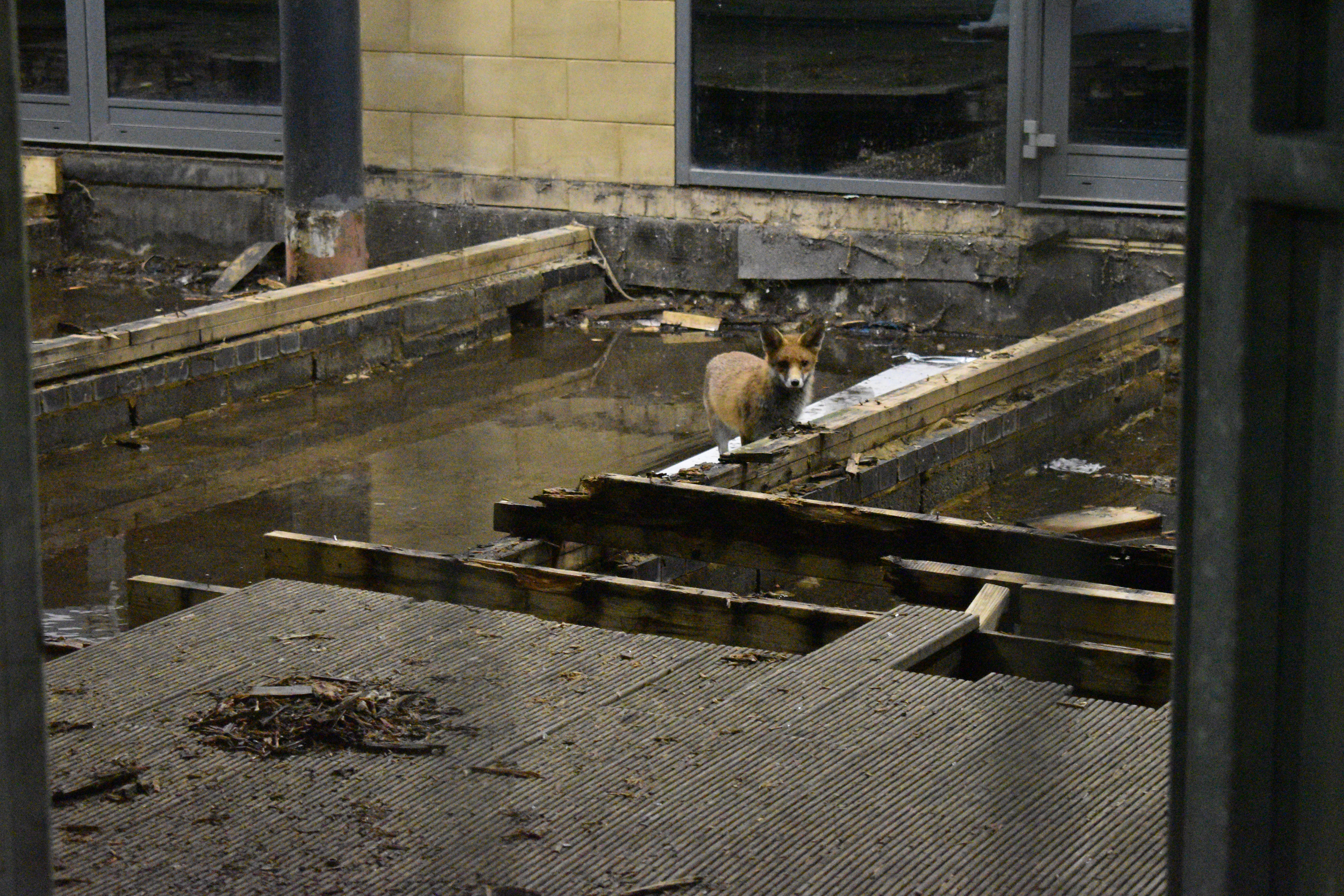
Leave a Comment I am trying to make sense of the world through my cameras (Nikon D3500 DSLR and Google Pixel). Here are six for the end of May 2026. There is a bit of a Hastings bias.
The Drowned World, JG Ballard, book review
Filed under: Book reviews, Environment | Tags: books, JG Ballard, Science fiction, The Drowned World
Comments (2) 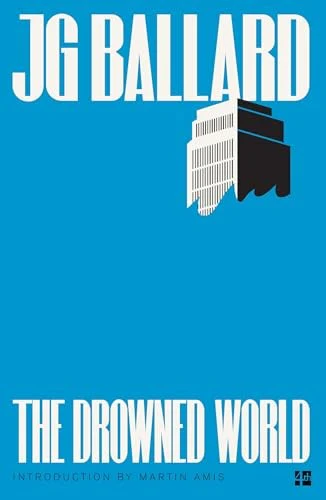
This book is not a modern climate change novel (I read the 4th Estate paperback published in 2024). First published in 1962, the same year as Rachel Carson’s Silent Spring was published, Ballard envisages severe climate change caused by “[t]he succession of geophysical upheavals which had transformed the Earth’s climate…a series of prolonged solar storms lasting several years caused by a sudden instability in the Sun had enlarged the Van Allen belts and diminished the Earth’s gravitational hold upon the outer layers of the ionosphere. As these vanished into space depleting the Earth’s barrier against the full impact of solar radiation, temperatures began to climb steadily, the heated atmosphere expanding outwards into the ionosphere where the cycle was completed.” (p21) The polar ice caps melted and civilisation’s cities were submerged under water and silt. Children are a rarity.
Temperatures began to rise steadily. Quite a bit of the story takes place as temperatures are heading towards those that cannot sustain human life. The people have gone north (though the terms of the migration are only scantily discussed). Declining fertility has reduced the human population to around 5 million. A residual population of biologists and scientists are studying/surveying the territory after London – or was it Berlin or Paris? – flooded and became a series of fetid lagoons populated by aquatic reptiles, notably caimans and iguanas as well as delightful malarial insects. There were also some remainers to be rounded up by Colonel Riggs and his team of former military operatives occupying a test ship.
The story focuses, however, on Robert Kerans (who lives in the top floors of the abandoned Ritz Hotel a penthouse suite complete with ready-to-wear wardrobe bizarrely left in place after the exodus) and his possible girlfriend, Beatrice Dahl. Beatrice is an independent-minded woman who refuses to leave when the authorities say they should (because it is going to get hotter and wetter). Beatrice lives in a block with a swimming pool and balcony and tends to her appearance assiduously, despite the apocalypse around her. The accommodation had once been her grandfather’s pieds à terre. He had been in money and had brought her up after the death of her parents soon after she was born.
Beatrice Dahl lay back on one of the deck-chairs, her long oiled body gleaming in the shadows like a sleeping python. The pink-tipped fingers of one hand rested lightly on an ice-filled glass on a table beside her, while the other hand turned slowly through the pages of a magazine. Wide blue-black sunglasses hid her smooth sleek face, but Kernans noted the slightly sullen pound of her firm lower lip. Presumably Riggs had annoyed her, forcing her to accept the logic of his argument. p.25
I say this because she is the only woman in the story. Not quite only a love interest, but her role is to be Kerans’ almost girlfriend and to the the desire of the true villain of the story, a character called Strangman. She reminds us of civilisation’s narcissism (actually, I mean capitalistic narcissism) in the sense of a simple definition of human female beauty and obsession.
Riggs wants to leave with the full team; notwithstanding Kerans’ and “the Dahl woman”, a character called Dr. Bodkin, Kerans’ assistant at the station, remains and Hardman who was the subject of a lively chapter as he was hunted down by Riggs’ men, only to slip away. He does reappear in the final chapter symbolising perhaps what can rapidly happen to us when we experience de-civilisation in combination with severe climate change; the two are not unconnected, of course.
The de-civilisation is best seen in the arrival of Strangman and his band of machete wielding looters. Their raison d’être is to loot what has been left behind as the cities flood, in this case, London. By some jiggery pokery, he manages to deploy pumps and dam walls to drain the lagoons, reveal the buildings, including museums, and take what is valuable such as jewelry, historical artefacts and equipment. He becomes increasingly meglomaniacal throwing lavish parties, entrapping Beatrice and wearing down and eventually torturing Kerans. Bodkin tries unsuccessfully to blow up the walls that keep out the water. His punishment is death.
Kerans is eventually saved from the machetes by the unexpected return of Colonel Riggs, along with his “dour conscientious Scotsman called McCready”, a troop of unnamed soldiers and weaponry. Within hours, though, Kerans has himself determined that the lagoons should be returned to leave alone the flooded cities and their secrets – basically, undo Strangman’s work and looting project. Whilst he does manage to blow up the walls, Colonel Riggs is not happy and shoots at Kerans injuring him in the leg. Kerans escapes, says farewell to Beatrice and achieves a getaway south (into the heat and storms). It is here that he is reunited with Hardman to reflect on a return to a world from the past – the primeval soup, effectively.
Shanghai
Most novelists draw on their own experience, at least for their first novel – as this was for Ballard. Ballard’s experience was one of 3 years in an Japanese internment camp and the huge floods that came down the Yangtse River. Ballard had a background in science – he was an editor of a scientific journal. He had also been a medical student practised in cutting up cadavers. So the extraordinary science behind the solar storms that precipitated his climate change made sense. The descriptions of the lagoons and their unfriendly inhabitants may be grounded in that, too.
Meaning
I have to admit, this is my first JG Ballard novel. Well, not quite. I read Crash many years ago, and I remember none of it! What I might be able to say is that Ballard has a particular view of human nature. Whether it be de-civilisation or sexual pleasure derived from road accidents. There is a sense of existentialism. None of the characters in The Drowned World seem overly interested in making things better. They live very much in the present and are highly individualistic – Beatrice with her appearance and stubbornness on the leaving question, Hardman and Bodkin, equally rejecting a flight to the North and some other kind of life, and Kerans himself finally and inexplicably leaving Beatrice with Riggs and fleeing into the abyss.
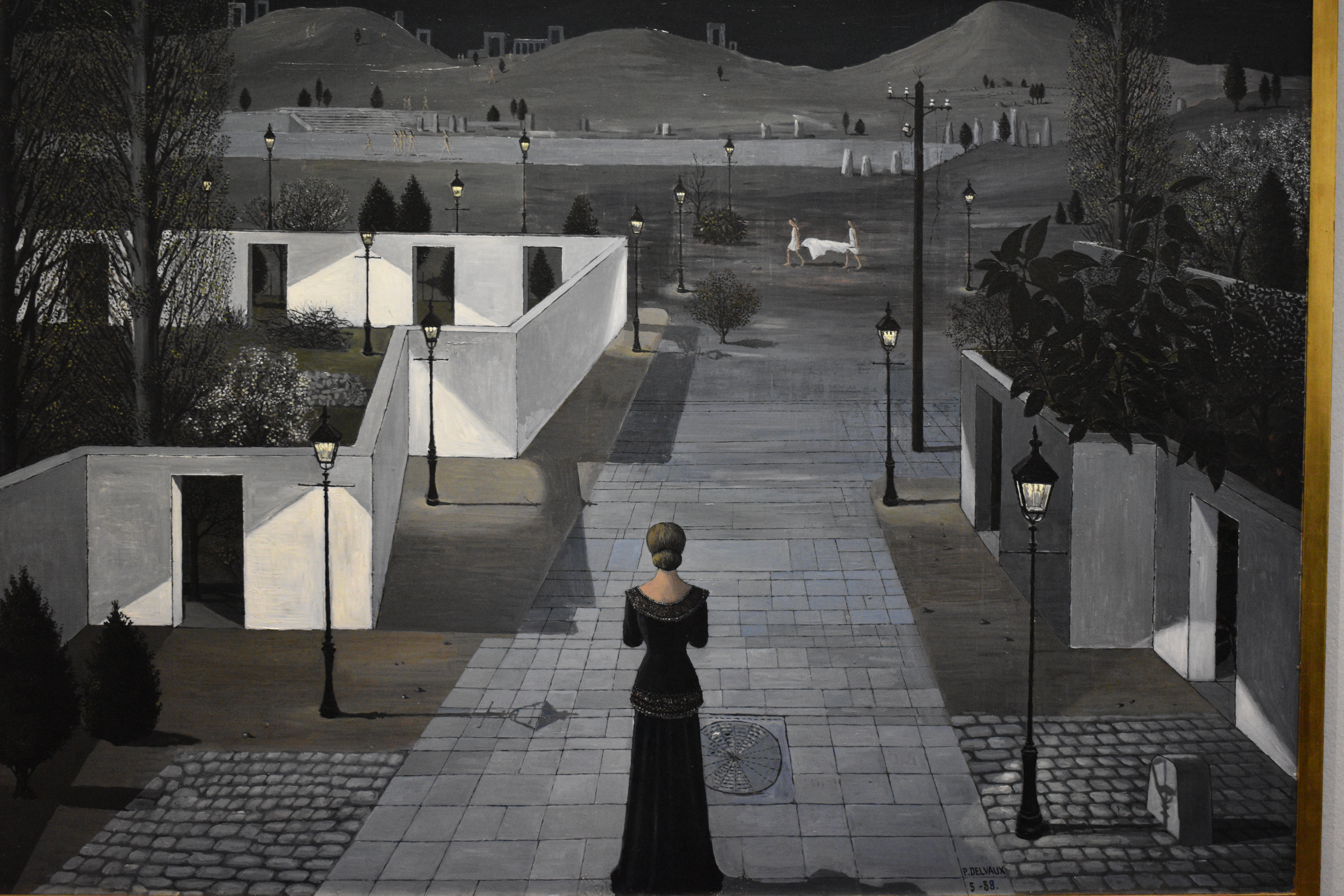
Here is existentialism on one side, and surrealism on the other. Beatrice’s penthouse is adorned with original works of Salvador Dali, Paul Delvaux (above left, picture taken from our recent visit to Vienna’s Albertina Gallery, Landscape with Lanterns) and Max Ernst. Surrealism propels us into fantasy world with new configurations of the familiar to unnerve us and push us towards deep reflections about what we understand by reality. They have a dream-like quality. And one dream in particular is recurring (and possibly haunting) the team. Beatrice’s so-called jungle dream briefly described on page 50 where she also reassures Kerans, “[d]on’t look so stern, you’ll be dreaming them too, soon.” And so he does.
As the great sun drummed nearer, almost filling the sky itself, the dense vegetation along the limestone cliffs was flung back abruptly, to reveal the black and stone-grey heads of enormous Triassic lizards. Strutting forward to the edge of the cliffs, they began to roar together in the sun, the noise gradually mounting until it became indistinguishable from the volcanic pounding of the solar flares…As the dull pounding rose, he felt the barriers which divided his own cells from the surrounding medium dissolving, and he swam forwards, spreading outwards across the black thudding water…” (p71)
The dream – in particular Kerans joining the ranks of those suffering them – is a trigger for some form of acceptance that humanity cannot survive in this de-evolution. The Drowned World is one that is returning to one that is dominated by reptiles, best adapted to the new reality of heat, swamp and flood. It might be feasible in the North to survive. but with a declined birth rate, the prospects are not good. So what is the point?
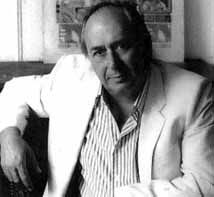
Picture: JG Ballard, http://www.zarez.hr/124/kritika1.htm
Amateur photographer
Filed under: Art, education, Photography, Travel | Tags: Brecon Beacons, Humber Bridge construction, Northern College, UEA, university education
Leave a Comment 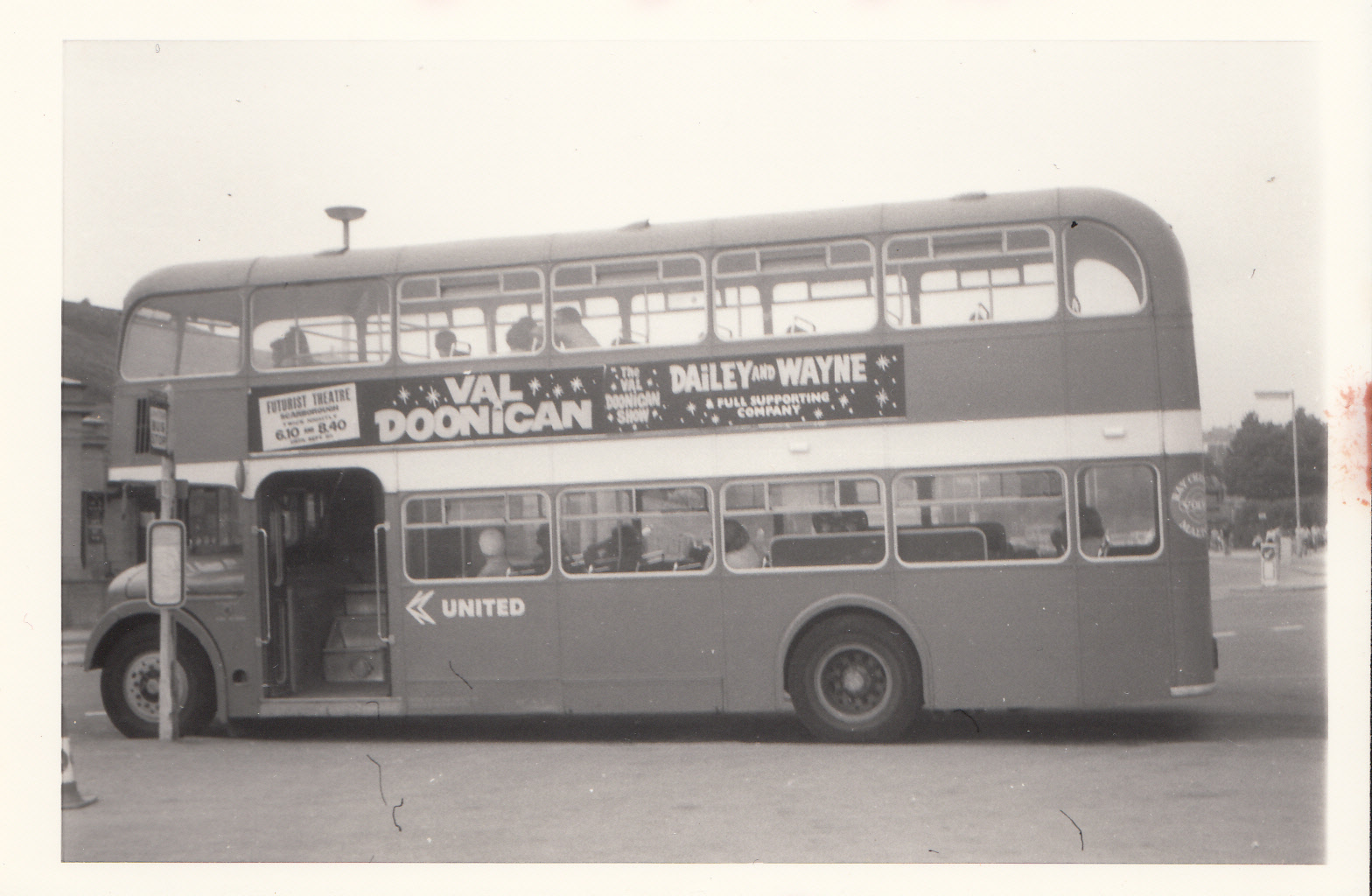
I probably once aspired to be a good amateur photographer. I remember using my first camera (though I cannot remember what it was) given to me by my father when I was about 10. Roll film was expensive and developing even more. So I did not take too many pictures. But the ones I did reflect something about who I was going to be. For example, I took a picture of a Bristol Lodekker in Scarborough. It can be dated by the advertising – Val Doonican and Dailey and Wayne to 1976 (I was 12 years old). I was fascinated by buses. Actually, I was fascinated by bus systems (I learnt to read the 24-hour clock from a bus timetable).
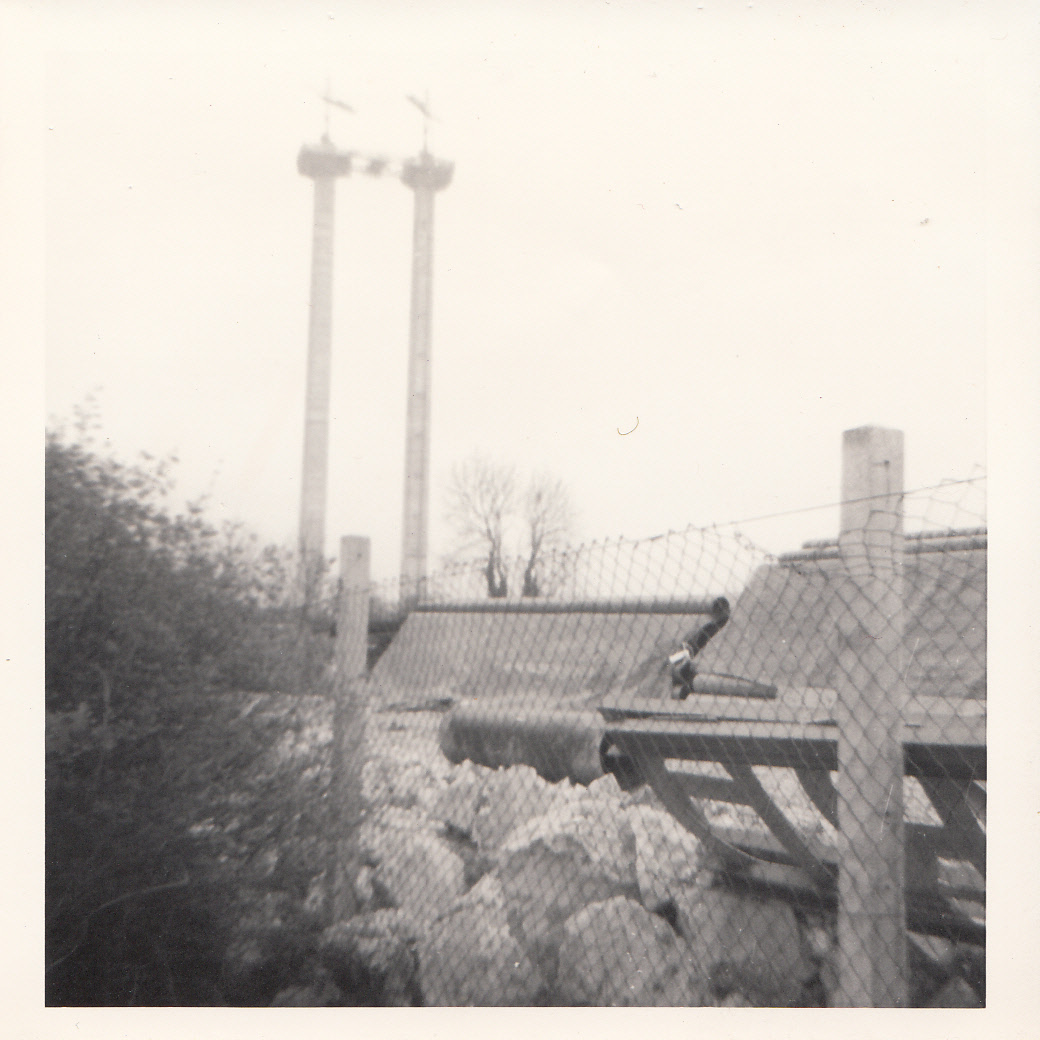
I do wish that I had taken more photographs of my eras. To the right is an incidental picture of the building of the Humber Bridge. This is the tower on the north side of the estuary being erected. It is the only one I have of the actual construction.
I have a raft of pictures of my youth. My time campaigning against animal suffering. These were taken in the days before social media and surveillance. I will not share these pictures; none depict activities that might be seen as unlawful. They are of demonstrations, meetings and social events. But I would not subject my friends and comrades to exposure, however long ago events.
In that period I used a Praktika PLC3 SLR. Praktikas were heavy had 42mm threads. They were not state-of-the-art. Whilst I drooled over Canon and Olympus SLRs, I went for a Praktika because it was not a Japanese brand. At the time I was traumatised by whaling – and the Japanese were some of the worst offenders. It was a protest (though endorsing the GDR at the time was perhaps not any better ethically).
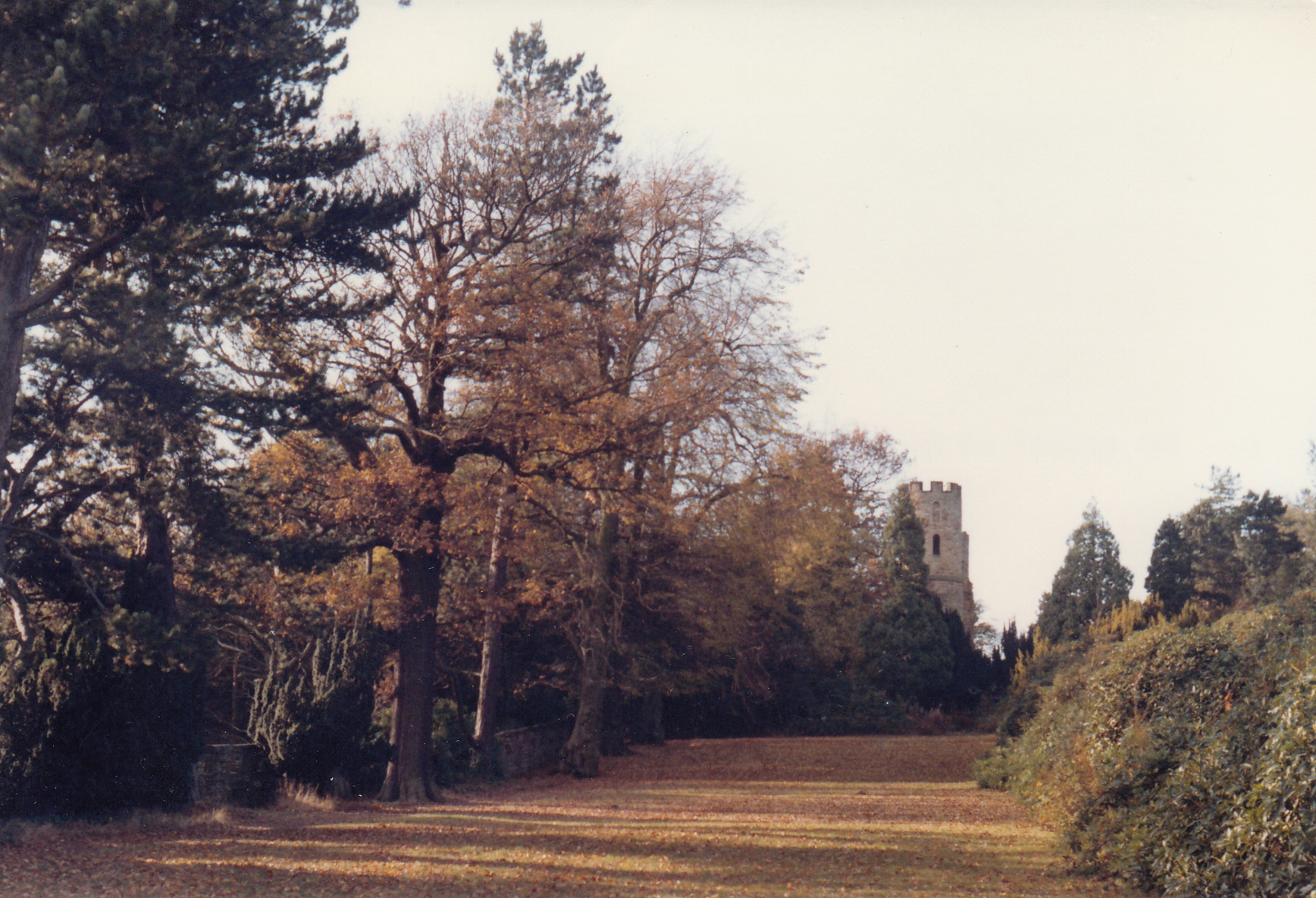
I left it all behind and went back into education. With no A-Levels and I went to Northern College in Barnsley on a scholarship from my trade union, ASTMS (Association of Scientific, Technical and Managerial Staffs). It was a 2-year residential based in a stately home in a valley looking over the M1. It represents a time of great happiness for me – the freedom to study and to be confronted by my arrogance, naïveté and immaturity. The grounds were awesome. The castle in the background is simply a folly. More importantly, just the concept of a 2-year residential studying labour and trade union history blows my mind.
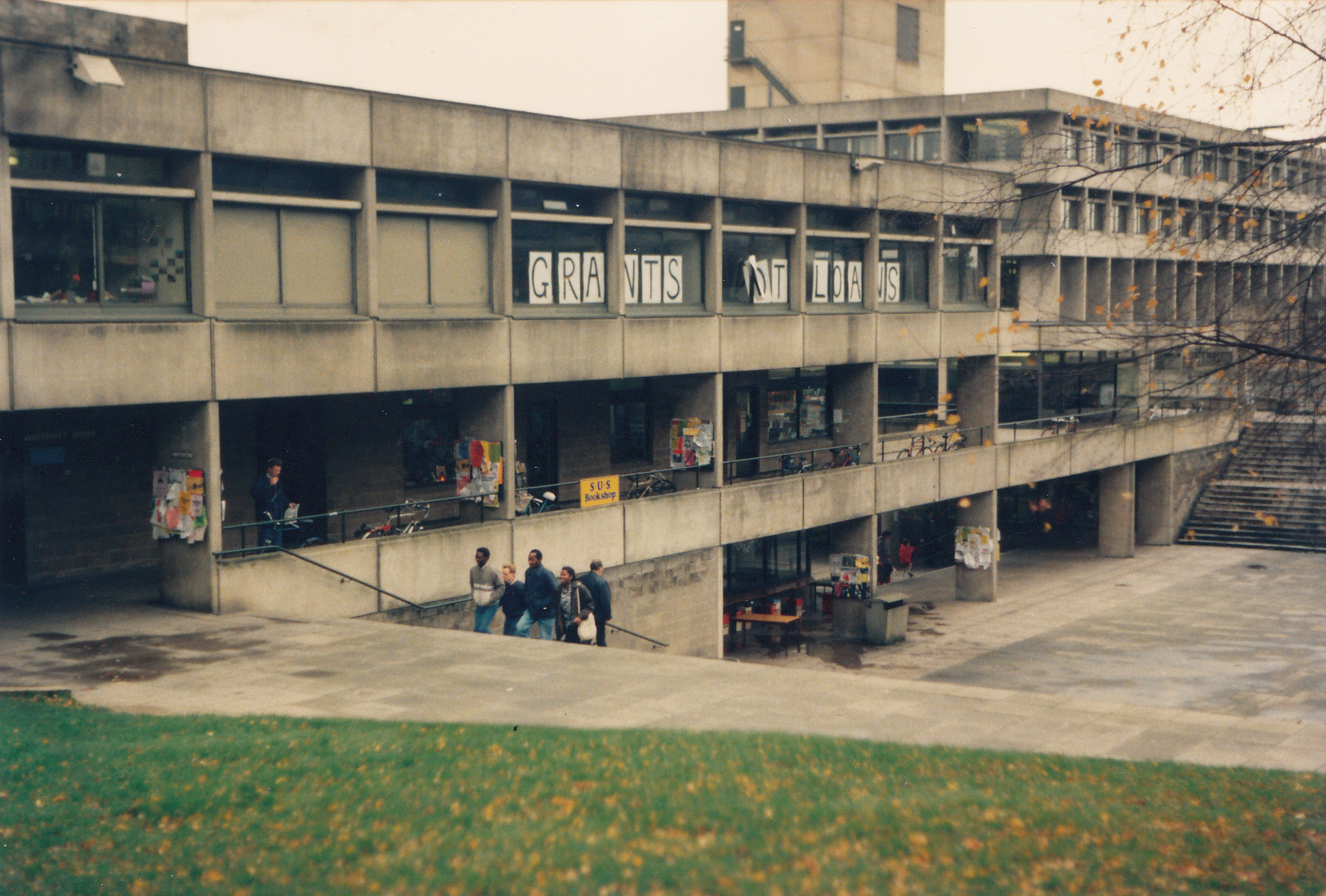
I then went unplanned to Norwich UEA. A brutalist concrete monstrosity. Which I love it for. I spent so much time in the library (which can be seen in the background of this campus square photo). It is autumn 1989. It is a time of student resistance to loans. I now work in a university – I could not have imagined that in 1989. My belief in the value of a university education independent of career opportunities so demanded by governments and policymakers is deeply embedded. It changed my life. It should be allowed to do so for young people today.
After completing my BA, I stayed in Norwich and endured 2 years of unemployment punctuated by life modelling at the nearby art college. That was a dare by a friend who was – and hopefully still is – a very handsome man. In the end he did not pursue it as a career, unlike me. I learnt a lot doing life modelling about how others perceive us/me. Being a life model is tough. Physically. It provided me with some self-confidence and willingness to use my body in protest and for art. For example, I participated in a naked protest against the Iraq War. I was also one of Spencer Tunick’s models when he did one of his famous shots in London in 2003.
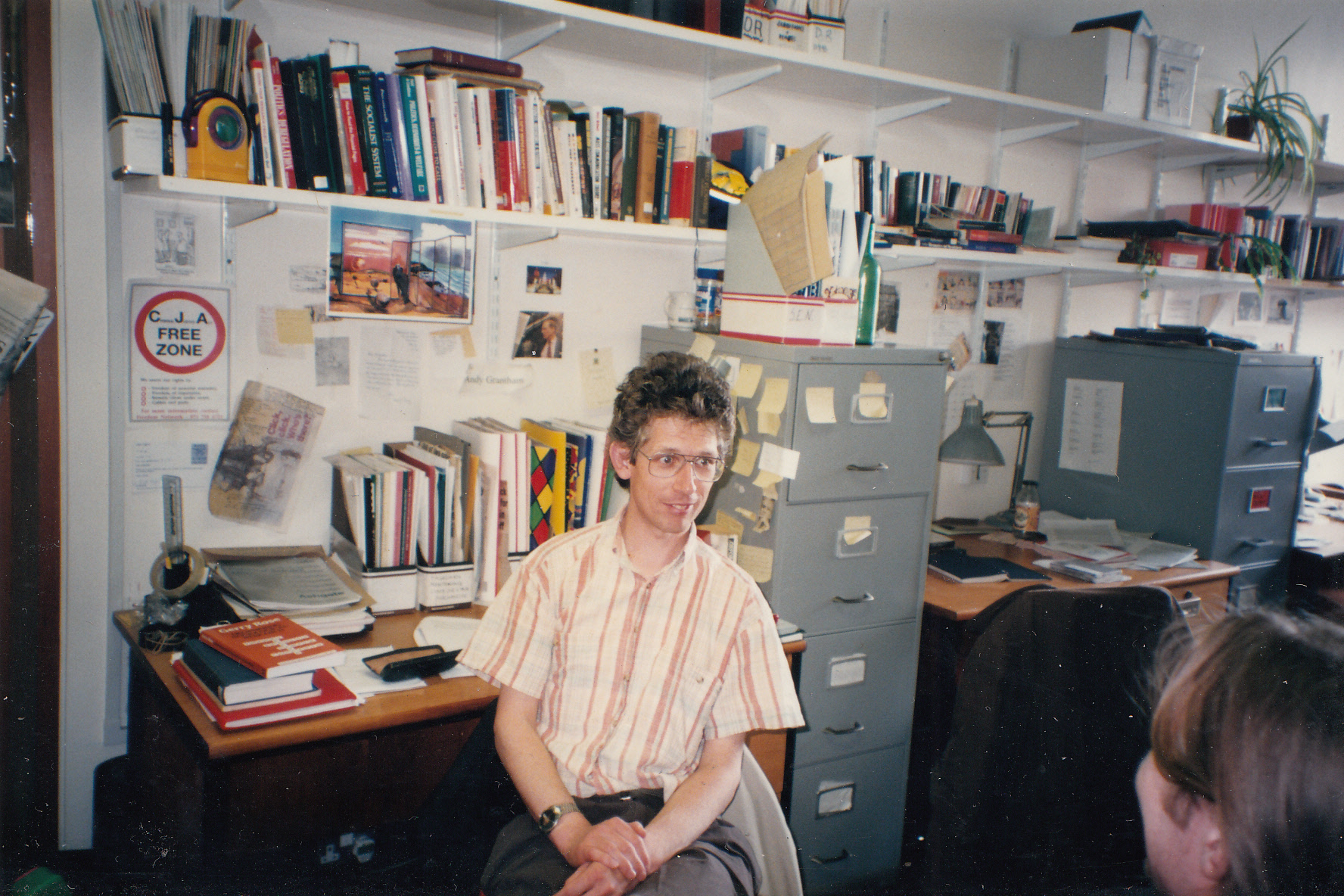
And then on to my PhD studies. This was pre-digital study. No PC. Lots of books and newspaper subscriptions. The newspapers would arrive 2 or 3 days after publication. I needed the Glasgow Herald for my case study. The CJA poster on the wall belies my ongoing life of demonstration. The Criminal Justice Act was an affront to freedom of expression.
Nevertheless, I felt so privileged to have a desk and access whenever I wanted. It was great. Style-wise, I did not have very much. Most of the time I was in jogging pants. In this picture (probably 1996) I was half decent. During this period I met a number of people who became close friends and others, whom I am no longer in touch with, but who showed me kindness and offered support. Again to maintain discreetness, the names are not for sharing. With one friend I shared a number of long-weekend adventures in national parks. We stayed in youth hostels, prepared gourmet meals in the evening and critiqued books afterwards, often to the chagrin of other hostellers. On the books, we agreed to read Penguin classics, partly because they were cheap (a mere
£1) and also because…well…they were classics.
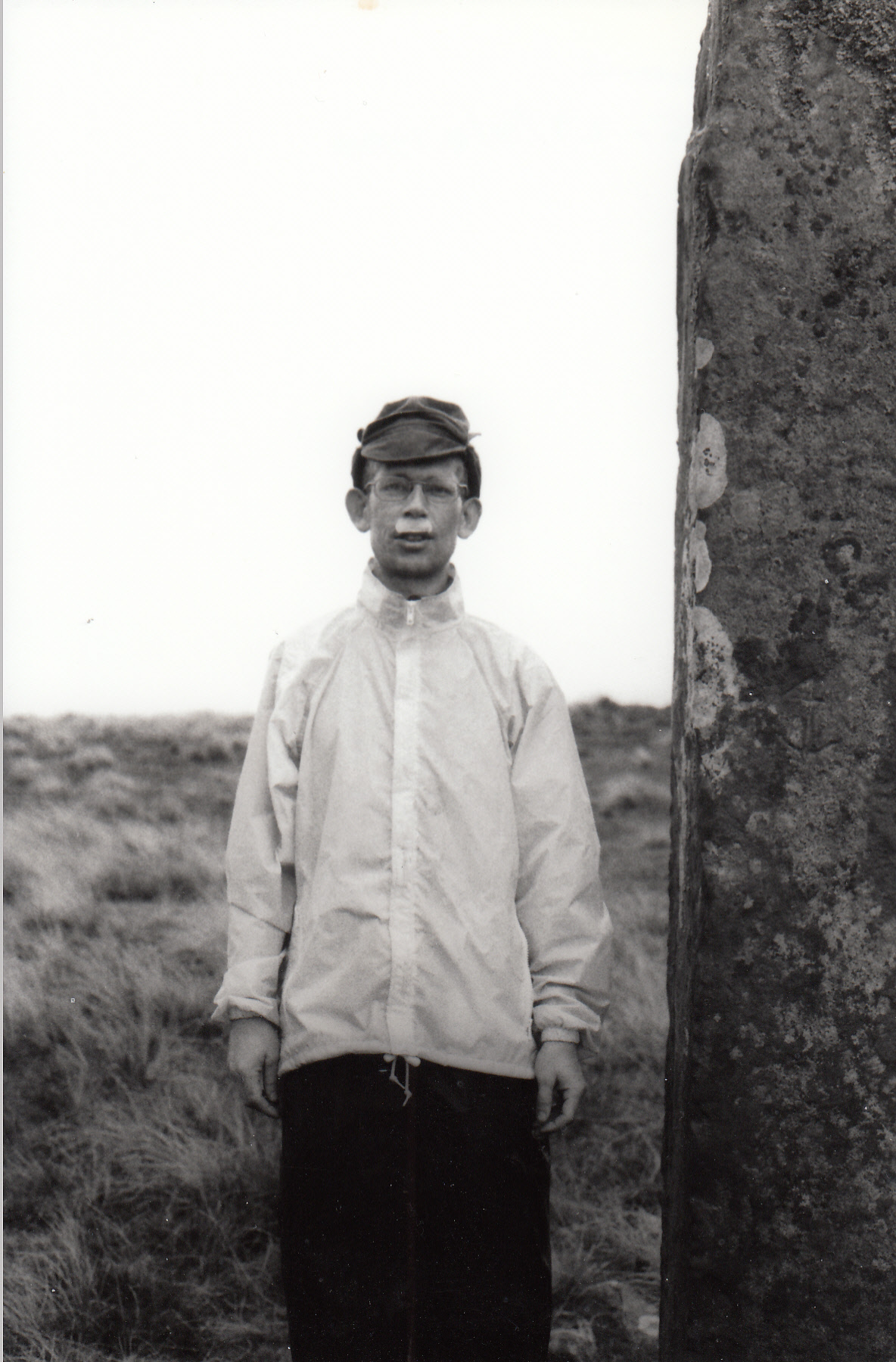
On one of our trips to the Brecon Beacons the weather was awful. Towards the end of our first day I slipped on a rock and went head-first into a stream that had become a torrent. I split my lip very badly. My companion did her best to stick the broken bits together again as I had flatly refused to go to A&E. We never visited Wales again.
 Be informed